- Shopping, made easy.
- /
- Get the app!
In Greek mythology, Medusa (meaning "guardian, protector", etc.), or Medusa, Medusa, or Medusa, is one of the Goliath workers. She is often described as a winged woman with a live serpent in her hair. Those who stare into her eyes will turn to stone. Most materials describe her as the daughter of Phorcys and Ceto, although Xu Guinus describes her as the daughter of Gergong and Ceto (or she and her sisters are the children of Tifeng and Aichena). In Greek mythology, Medusa was beheaded by Perseus, the hero, and Perseus used her head as a weapon until he handed it to Athena, the goddess, and put it on her shield. Her head retained the ability to turn onlookers into stones. In classical times, the head of Medusa appeared in the evil device called Gorgoneion. According to Hesiod and Aeschylus, she lived and died in Salpeyton, near the coastal town of Iolia. Dionysios Skytobrachion, a novelist in the 2nd century BC, put her somewhere in ancient Libya, where Herodotus said that the Berbers developed her myth in their traditional religion. According to the Library of Apollodoros, the poet, Medusa is one of the Gorgon sisters. Its appearance is described as a head wrapped in dragon scales, tusks like wild boars, bronze claws, and golden wings. The image of Medusa created by ancient Greeks 1000 years ago In the 5th century BC, the ancient Greek city state of Palin issued more than half of the drachma silver coins. The positive image of the silver coins was Medusa, so the head of Medusa was used as an ornament to avoid evil in ancient Greece.
 espere Rhodium Plated Gold Coin Pendant Necklace 20 Inch | Small Medallion Gold Pandent Necklace Long for Layering
KWD 8
espere Rhodium Plated Gold Coin Pendant Necklace 20 Inch | Small Medallion Gold Pandent Necklace Long for Layering
KWD 8
 YFN Sister Gifts from Sister, Sterling Silver Tree of Life Sister Abalone/Turquoise Pendant Necklace Jewelry, Birthday Jewelry Gift Necklaces for Sisters
KWD 15.500
YFN Sister Gifts from Sister, Sterling Silver Tree of Life Sister Abalone/Turquoise Pendant Necklace Jewelry, Birthday Jewelry Gift Necklaces for Sisters
KWD 15.500
 -15%
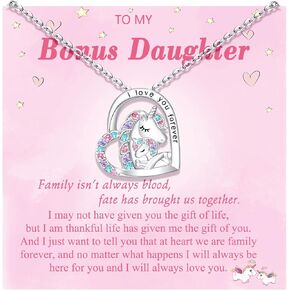
UPROMI To My Daughter/Granddaughter/Niece/Bonus Daughter/Girl Unicorn Necklace, Birthday Mothers Day Gifts for Little Girls
KWD 5.500
-15%
UPROMI To My Daughter/Granddaughter/Niece/Bonus Daughter/Girl Unicorn Necklace, Birthday Mothers Day Gifts for Little Girls
KWD 5.500
 Unicorn Jewelry Set for Girls, 925 Sterling Silver CZ Unicorn Necklace Earrings Set Birthday Gift for Daughter Granddaughter
KWD 11
Unicorn Jewelry Set for Girls, 925 Sterling Silver CZ Unicorn Necklace Earrings Set Birthday Gift for Daughter Granddaughter
KWD 11