- Shopping, made easy.
- /
- Get the app!
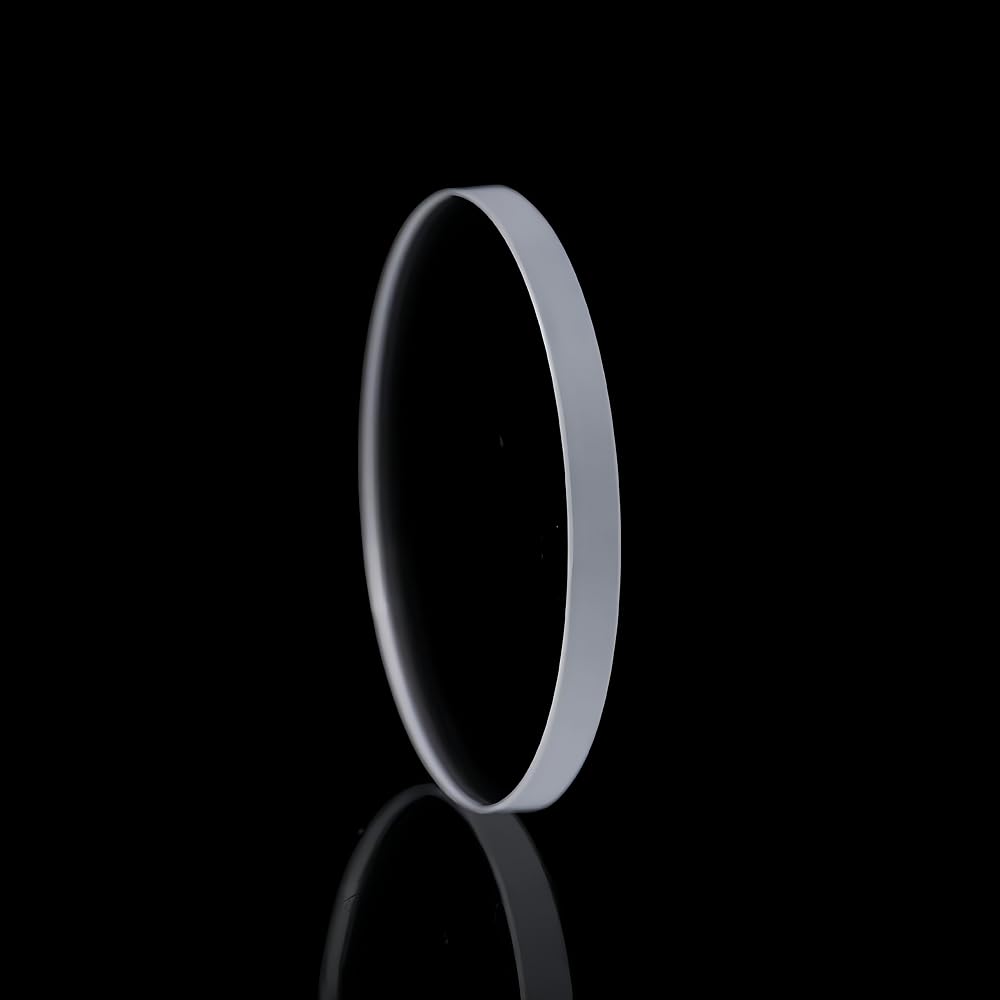
Main characteristics: Calcium fluoride (CaF\u2082) crystals have excellent transmittance over a wide wavelength range from vacuum ultraviolet (130nm) to infrared (8µm). It has the features of high humidity resistance and no birefringence.
· Application scenarios: These window plates are typically used in precision optical systems that require wide spectral transmission, such as some infrared lenses, spectrometers, machine equipment, etc.
· Precautions: Calcium fluoride material has low hardness and is fragile. It may crack under drastic temperature changes or impacts, and is also prone to damage when in with glass or metal. Special care is required during operation.
Calcium fluoride window lens
Material: calcium oxide single crystal
Specification: D10/15/20/25/30/40/50/60/80/100/150
Transmission range (μm): 0.13~9.0
Transmittance: >90% (0.3~7μm, 3mm)
Refractive index (5μm): 1.39908
Expansion coefficient (℃-1): 18.85×10⁻⁶
Gram's hardness (kg/mm2): 158.3 (100)
Elasticity coefficient: C11=164; C12=53; C44=33.7
Young's modulus (Gpa): 75.79
Poisson's ratio: 0.28
Solubility (g/100gH2O-20℃): 0.0017
Solubility surface: (111)
Density (g/cm3): 3.18
Melting point (℃): 1360
Application fields: High-energy machine optics, Excimer lasers
Calcium fluoride (CaF2) has a high transmittance in the ultraviolet to mid-infrared (250nm~7um) so it is widely used in the manufacture of prisms, windows and lenses, etc. In some applications with a wide spectral range it can be used directly without coating, especially its small absorption and high machine smell value make it ideal for excimer machine optical systems.
 High-Definition 50MM Achromatic Refractor Objective Lens for DIY Astronomy Telescopes - Multi-Coated Glass(D 52mm/F 410)
KWD 102.500
High-Definition 50MM Achromatic Refractor Objective Lens for DIY Astronomy Telescopes - Multi-Coated Glass(D 52mm/F 410)
KWD 102.500
 R Axis 100mm RS100-L Manual Sliding Table with 360° Rotation and Precision Angle Adjustment for Optical Micrometer
KWD 0
R Axis 100mm RS100-L Manual Sliding Table with 360° Rotation and Precision Angle Adjustment for Optical Micrometer
KWD 0
 R Axis 60mm RSP60-L RS60-L Manual 360 Degree Adjustable Optical Rotary Slide Micrometer Platform(RSP60-L)
KWD 0
R Axis 60mm RSP60-L RS60-L Manual 360 Degree Adjustable Optical Rotary Slide Micrometer Platform(RSP60-L)
KWD 0
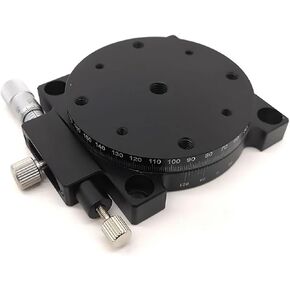 R Axis 90mm RS90-L Manual Sliding Table with 360 Degree Rotation - Precision Displacement Angle Adjustment Platform
KWD 0
R Axis 90mm RS90-L Manual Sliding Table with 360 Degree Rotation - Precision Displacement Angle Adjustment Platform
KWD 0