- التسوق ، اصبح سهلا.
- /
- احصل على التطبيق!
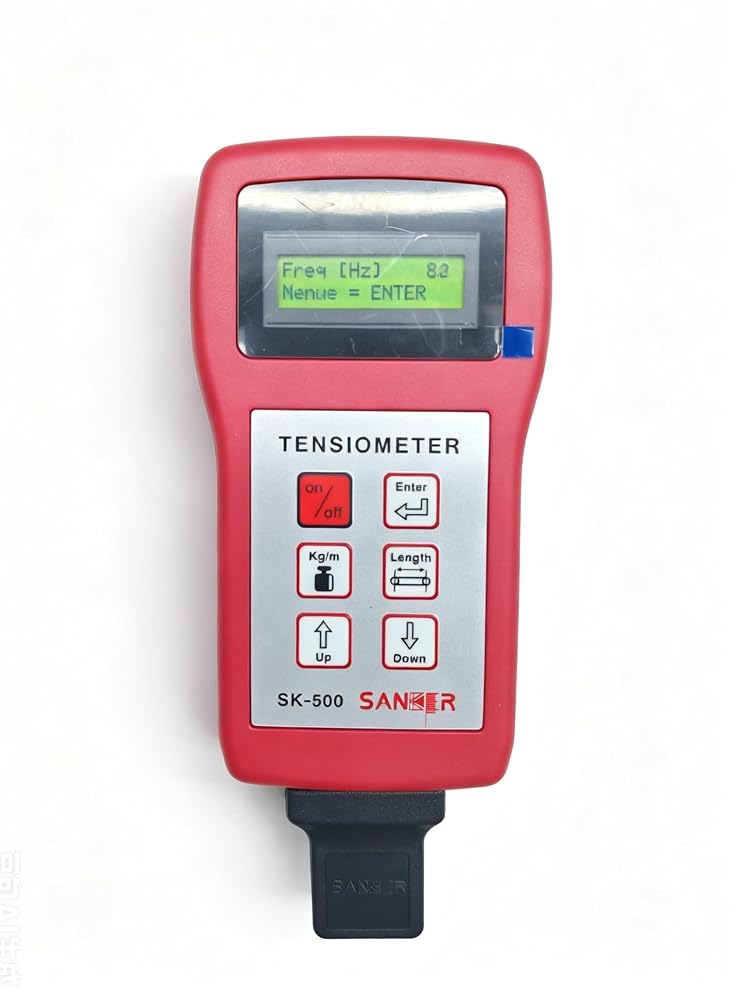
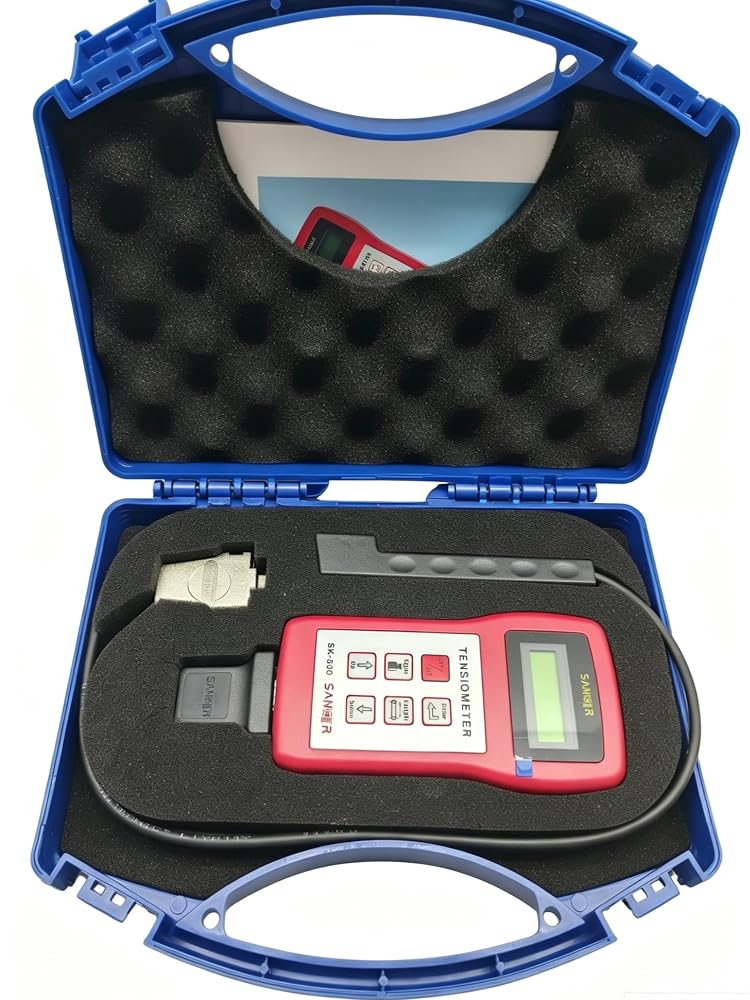
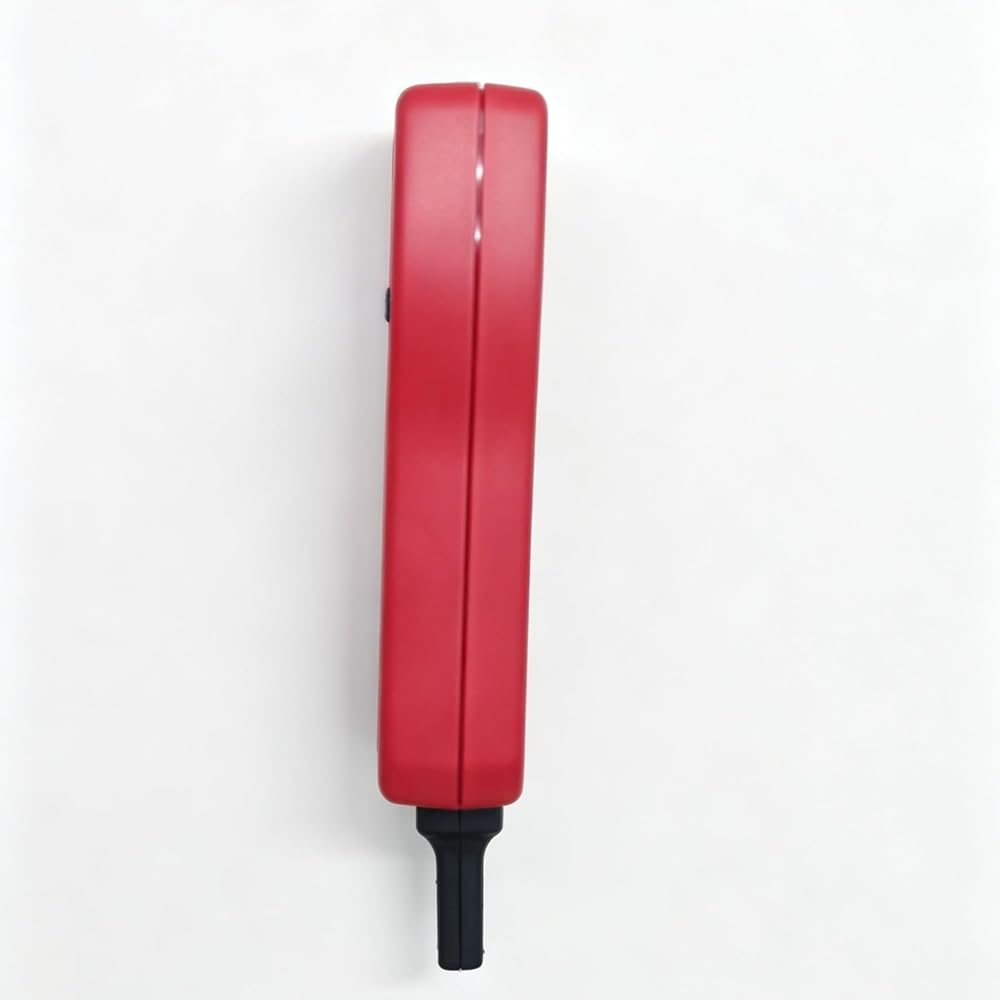
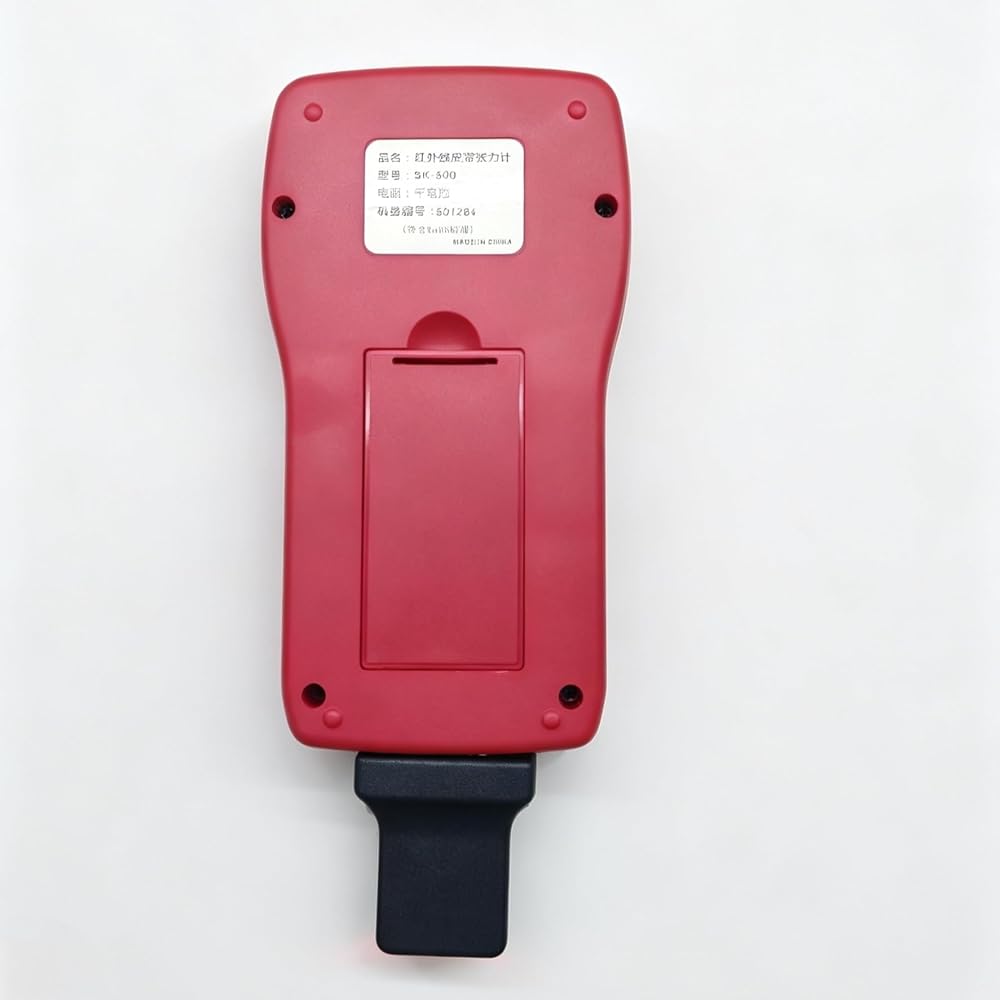
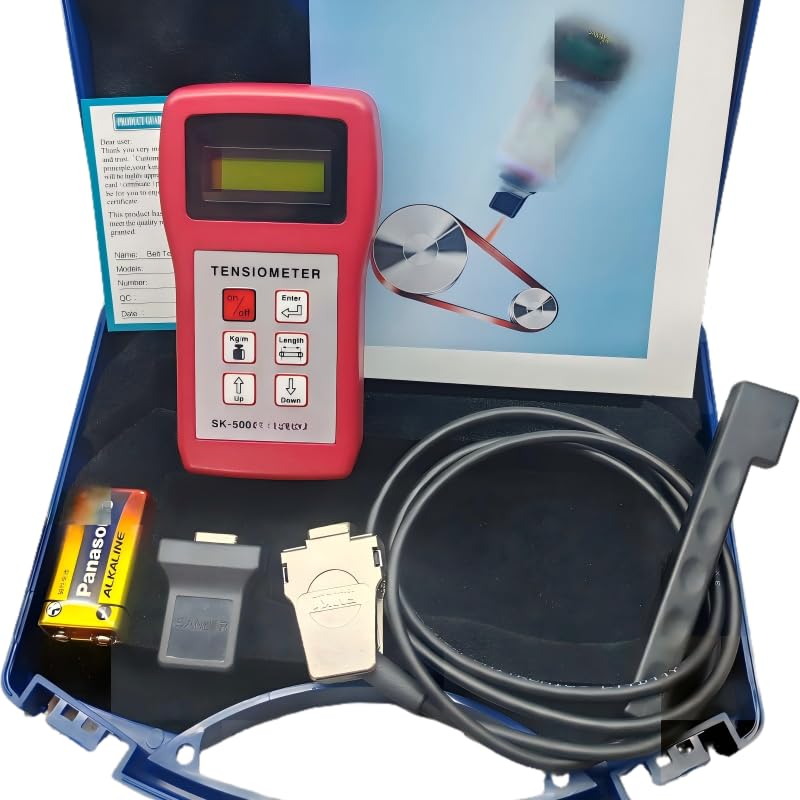
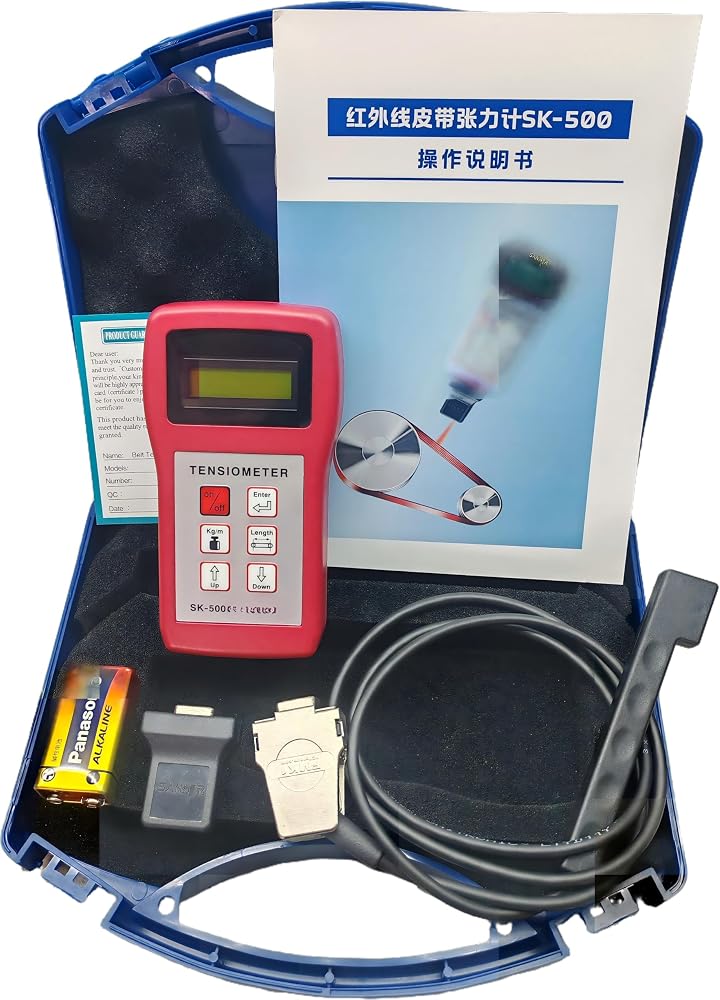
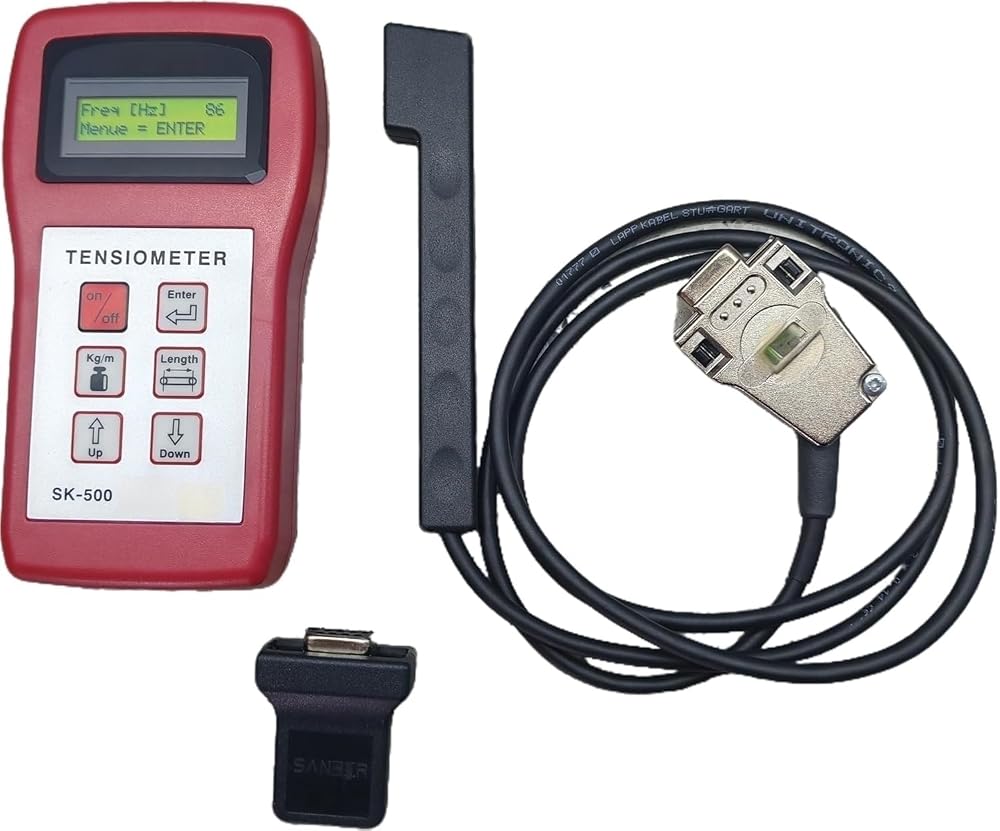
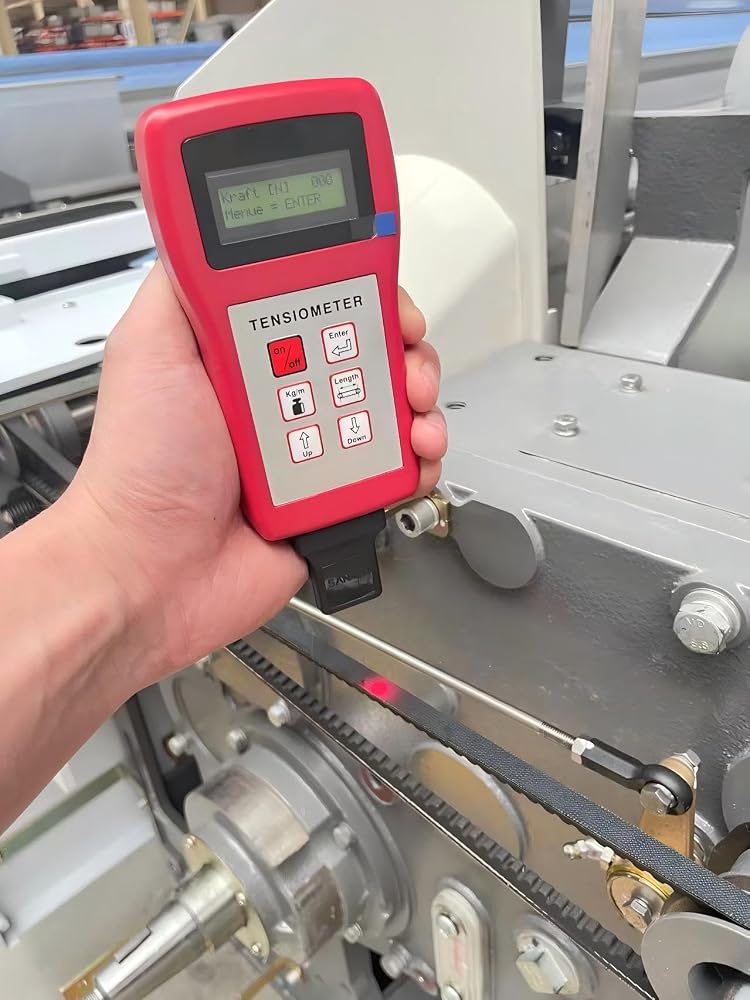
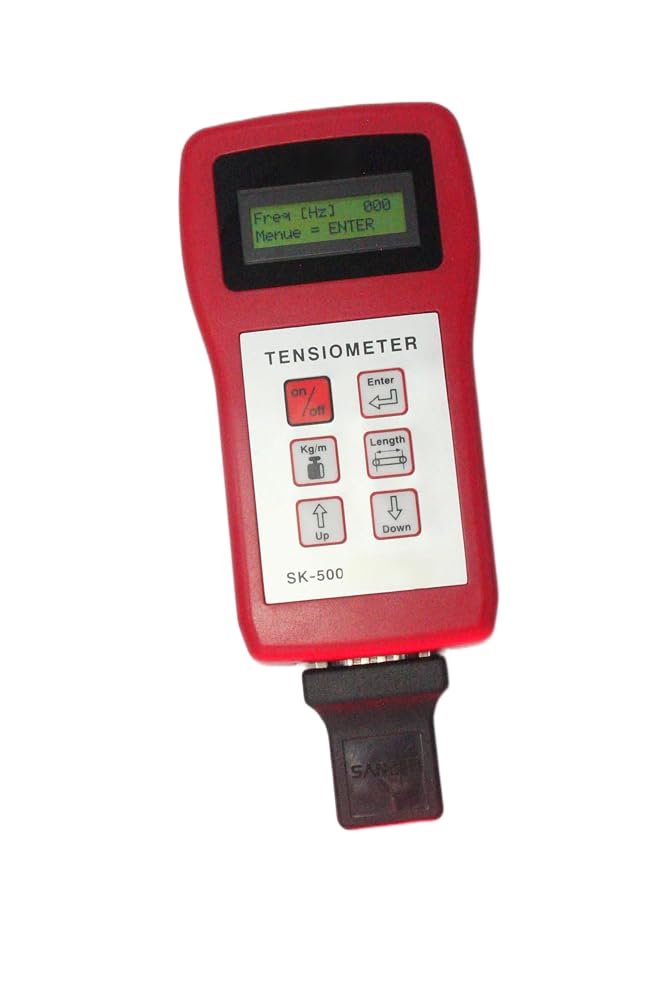
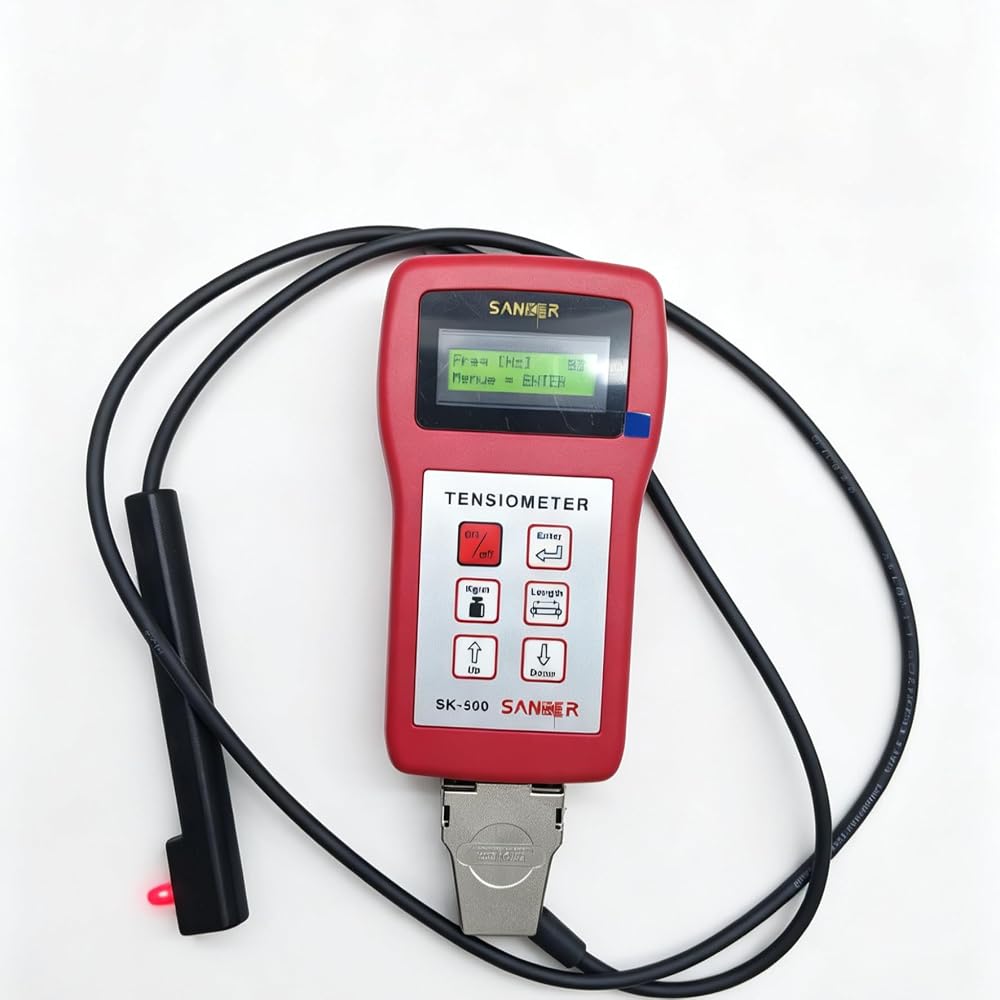
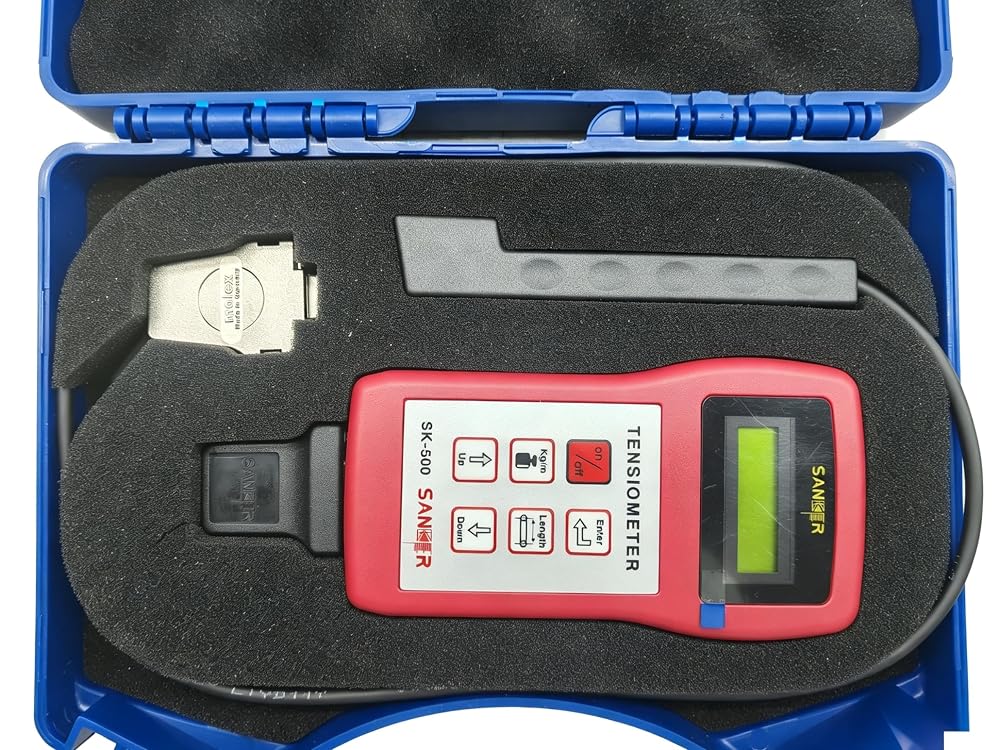
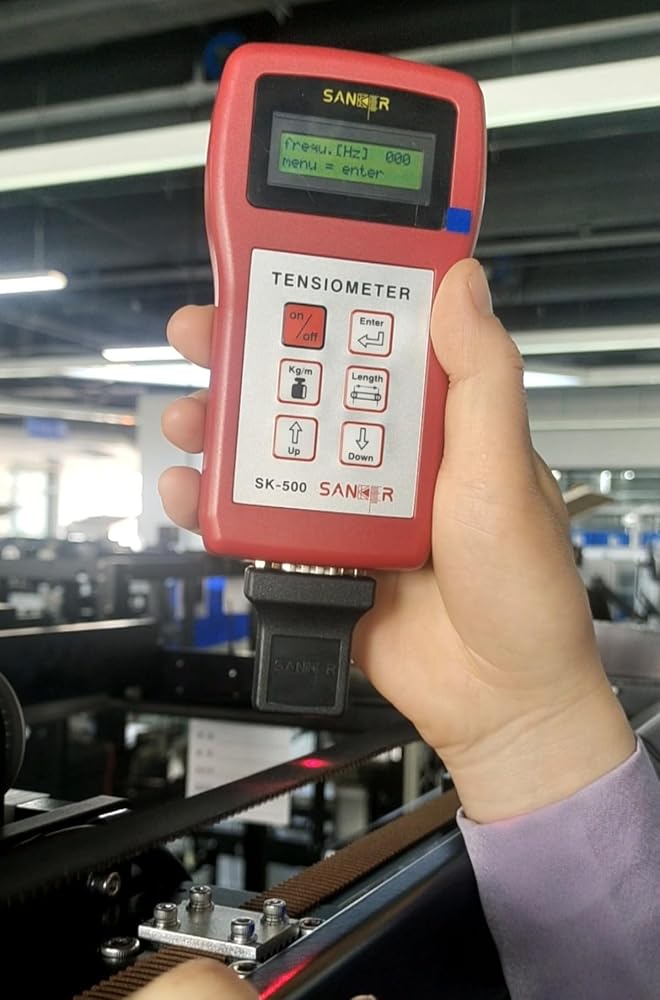
The belt tension meter SK-500 is a portable, lightweight instrument designed for precise measurement of belt natural vibration frequency and belt tension in various belt types such as V-belts, toothed belts and ribbed belts. It is ideal for maintenance professionals seeking to optimize belt performance and extend service life by ensuring correct tension settings. Its compact design and flexible sensor neck make it especially suitable for use in confined or hard-to-reach machine areas. The device supports quick measurement and trend analysis, making it a versatile tool for industrial environments. The belt tension meter SK-500 uses a vibration-based measurement method to determine belt natural vibration frequency in Hertz (Hz) and belt tension in Newton (N) or pound-force (lbf). Why is correct belt tension essential? 1.A belt's purpose is to transmit rotational drive force between pulleys.For this to be achieved,the tension of the belt must be set accurately during installation。 2.Insufficient tension can result in slippage.excess heat or premature belt and pulley wear. 3.Excessive tension results in stress on the belt.bearings and shafts. 4.Incorrect tensioning is the most significant cause of drive belt failures,before faulty drive alignment. 5.It can reduce system performance/efficiency as wellas life span of the components involved. 6.In worst case scenario,insufficient belt tension can cause engines to fail completely. What factors affect belt tension? Factors that in fluence belt tension over time include heat.mechanical stress and excessive moisture。 All of the above factors cause belt aging that leads to belt slippage and increase of wear This reduces the grip between the belt and the pulleys,increasing the chance of slippage and rate of wear. Problems with belt tension not only arise from when the belt isinstalled,but by a lack of freguent maintenance. Why use a belt tension meter? Improper belt tension is even more concerning when manufacturers measure belt tension using a contact guage. A force gauge is a piece of equipment used to manually measure the force of a belt during a'push or pull' test! Operators press their thumbs across the belt and use their sense of touch to determine the tightness of a belt. However,these gauges are typically very clumsy,difficult to use in tight spaces and arenot always accurate. Non-contact measurement-the challenge The challenge with freguencies In an ideal world.industrial belts would vibrate at a pure sinusoidal frequency-but they don't. Actually,belts mostly vibrate at several freguencies simultaneously. Belts vibrating at multiple freguencies are a particular problem for electric power-assisted systems(EPAS)in vehicles.That's because multiple sinusoids create a complex waveform. Whereas time-domain analysis is adeguate for a single-frequency waveform,a multi-freguency wave form cannot be accurately analysed.This could lead to a false tension measurement.Operators therefore need a more precise option.For tunately,there is a solution.
 موزع ورق الاختبار الكيميائي النبيل ، 0-400 جزء في المليون ، QT-10
KWD 7
موزع ورق الاختبار الكيميائي النبيل ، 0-400 جزء في المليون ، QT-10
KWD 7
 UV Meter ، مقياس درجة حرارة الأفلام الشمسية LS301 اختبار زجاجي للدرع الحراري مع عرض خاصية عزل حجب IR IR
KWD 282.500
UV Meter ، مقياس درجة حرارة الأفلام الشمسية LS301 اختبار زجاجي للدرع الحراري مع عرض خاصية عزل حجب IR IR
KWD 282.500
 Model-Ampericometer Model-A ، أداة قياس مظلة الغابات ، حالة خشبية
KWD 32.500
Model-Ampericometer Model-A ، أداة قياس مظلة الغابات ، حالة خشبية
KWD 32.500
 صريف حيود ناقل الحركة 1600/1200/1000/600/300/80 خط ورقة PET بصرية 2 مم لتدريس مقياس الطيف الضوئي وتجربة التحليل الطيفي (1000 خط / مم)
KWD 5.500
صريف حيود ناقل الحركة 1600/1200/1000/600/300/80 خط ورقة PET بصرية 2 مم لتدريس مقياس الطيف الضوئي وتجربة التحليل الطيفي (1000 خط / مم)
KWD 5.500