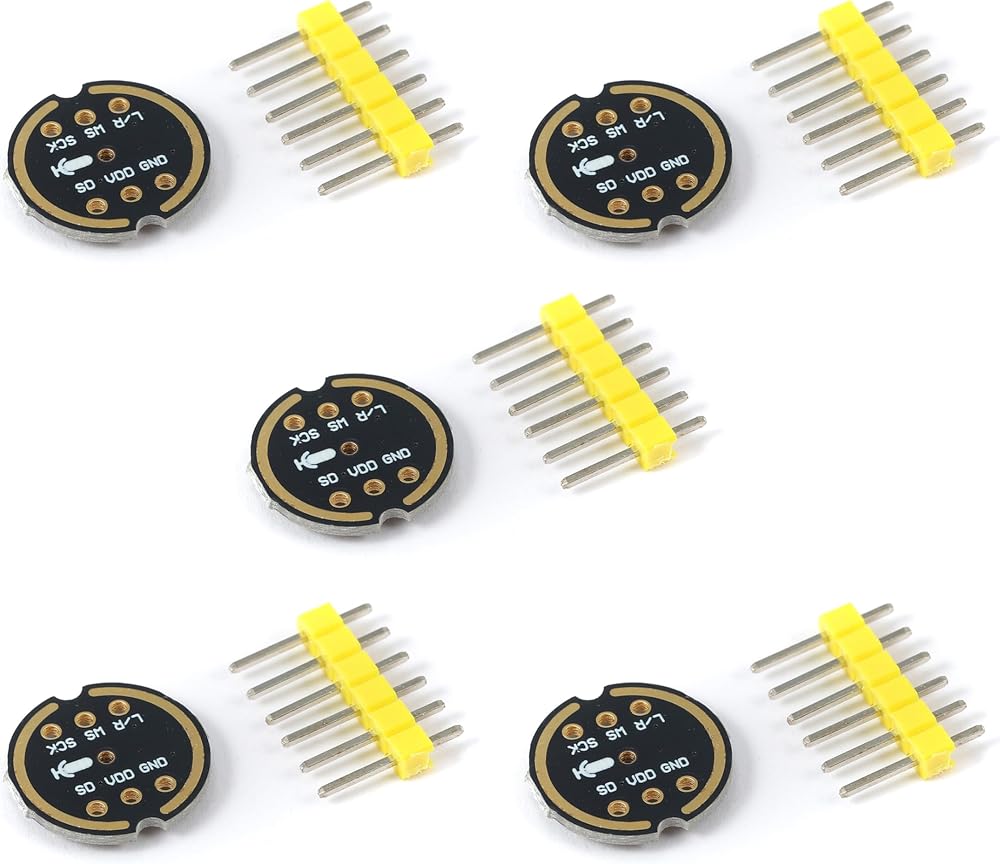
الاجهزه الالكترونيات الامريكية قد تحتاج الى محمول فولت من ١١٠ الى ٢٢٠.قد تحتاج إلى محول كهرباء
مميزات خاصة
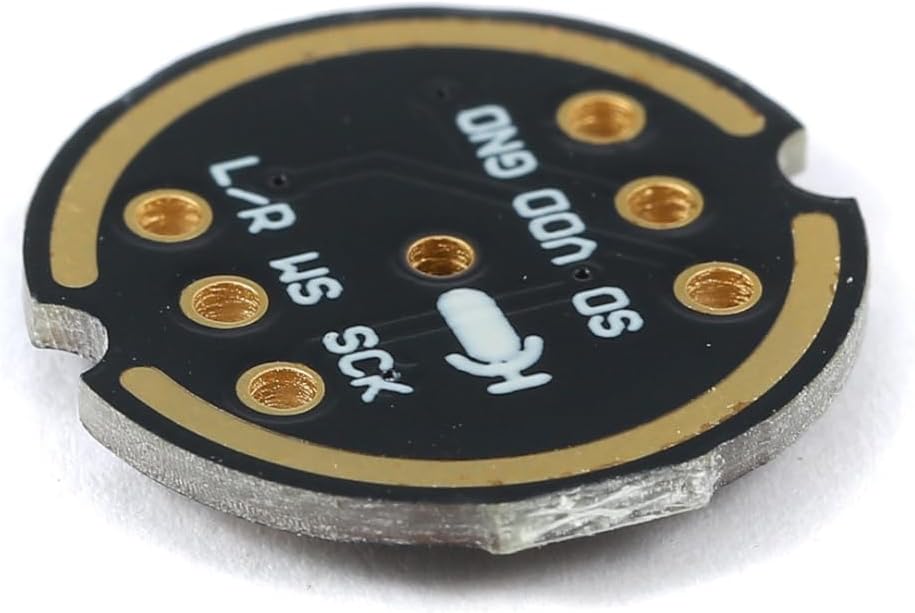
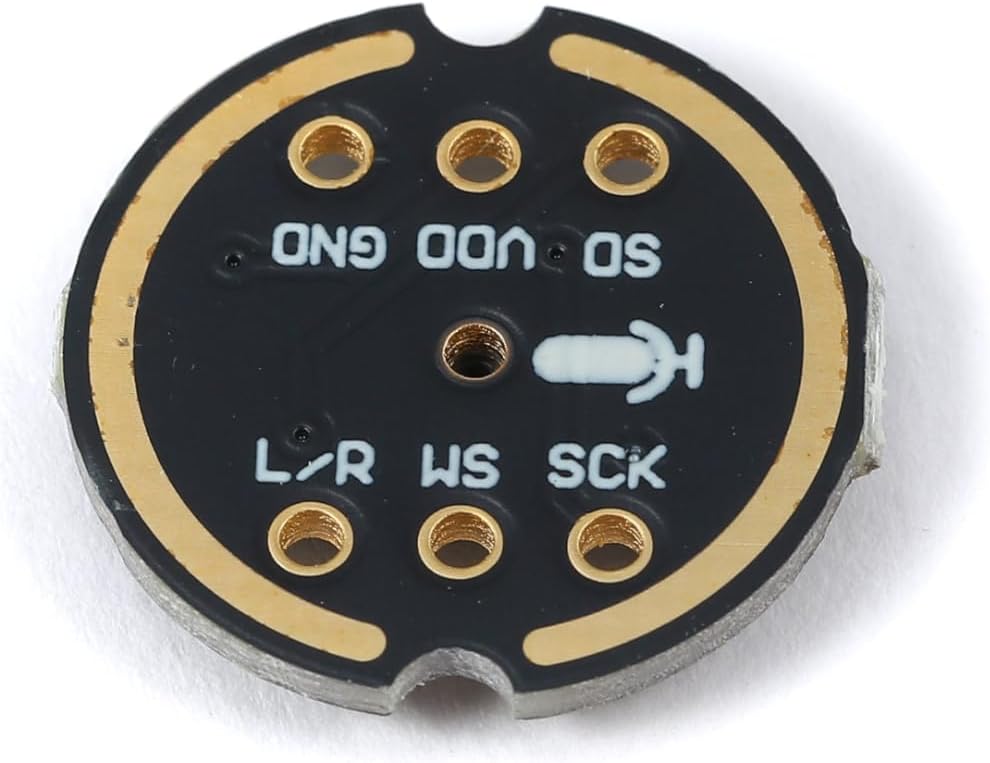
Upgraded version:The L/R pins have been updated to be directly grounded
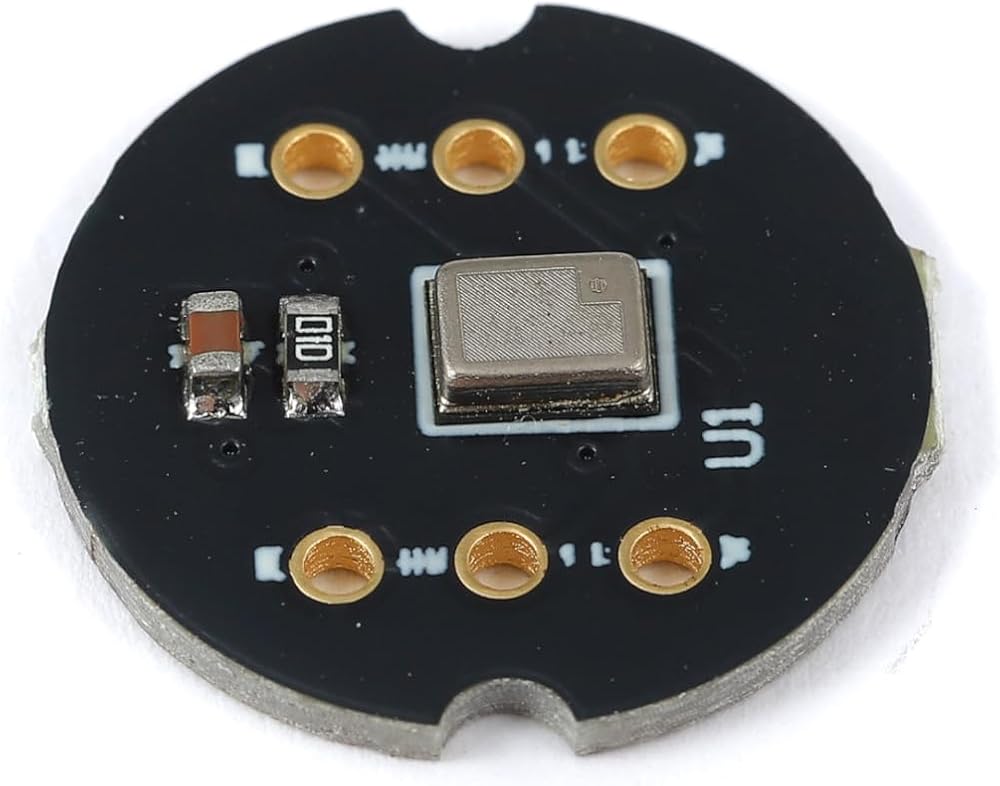
For many microcontrollers, adding audio input is easy through one of our analog microphone breakouts. However, as you move to larger, more advanced microcontrollers and microcomputers, you may find yourself without analog inputs or prefer to avoid the noise introduced by analog microphone systems. Once you move beyond 8-bit microcontrollers, you'll typically find that I2S can handle peripheral digital audio data! That's where the I2S microphone breakout featuring the ICS43434 comes in.
Instead of an analog output, there are three digital pins: clock, data, and left/right (Word Select) clock. When connected to a microcontroller/computer, the “I2S controller” drives the clock and word select pins at a high frequency and reads data from the microphone. No analog conversion required!
The microphone is a single-element unit. You can select it for the left or right channel by connecting the Select Pin to power or ground. If you need stereo, use two microphones! You can set them up for stereo by sharing the clock, WS, and data lines, but with one selecting ground and the other selecting high voltage to high voltage. No firmware or driver configuration is needed; you'll get 24-bit output immediately.
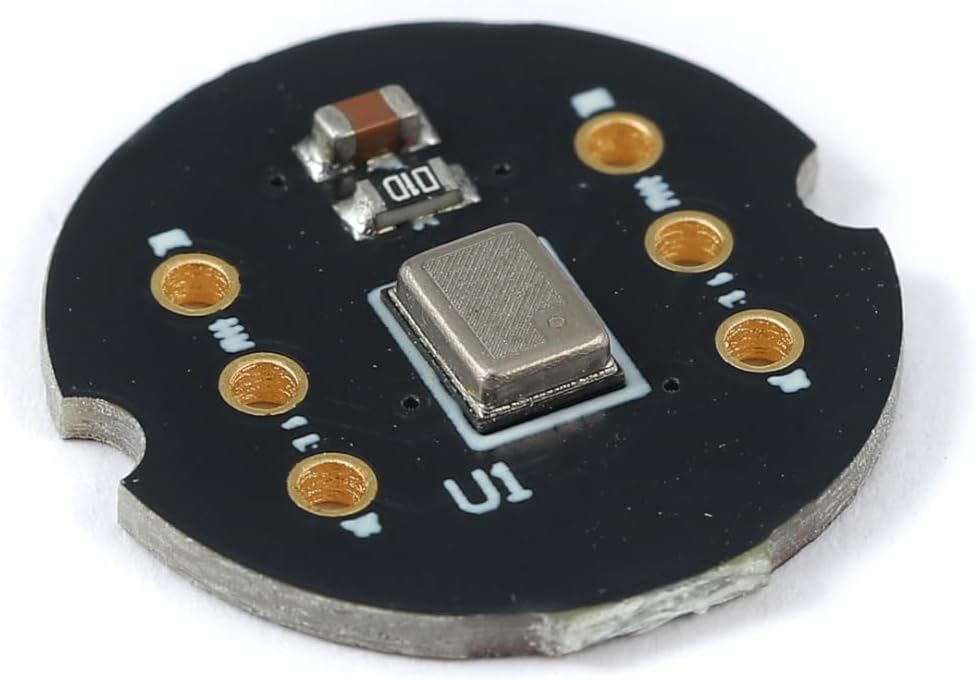
This I2S microphone is bottom-mounted, so ensure your bottom has holes facing the direction you want to capture sound. It is a 1.6-3.6V device, so it is not compatible with 5V logic (though you are unlikely to use a 5V logic device with I2S anyway). Many beginner microcontroller boards do not have I2S, so ensure it is a supported interface before attempting to integrate it! This microphone is best used with M-series chips such as SAMD21 or SAMD51, ESP32, RP2040, or RP2350, or development boards.
Listen to this good news—we now have a super-small breakthrough board ICS43434 microphone. Just like the “classic” element microphone, the MIC can detect sound and convert it into voltage, but they are smaller and thinner. This microphone is not even analog; it is purely digital. I2S is a small, low-cost MIC with a frequency range of approximately 50Hz to 15kHz, suitable for all general-purpose audio recording/detection. The chip features an integrated low-pass filter that cuts off frequencies above 24kHz.
 وحدة ميكروفون متعددة الاتجاهات INMP441 واجهة I2S عالية الدقة ومنخفضة الطاقة وحجم صغير للغاية لـ ESP32 يمكنك تركيبها بنفسك، 3 قطع
KWD 5.500
وحدة ميكروفون متعددة الاتجاهات INMP441 واجهة I2S عالية الدقة ومنخفضة الطاقة وحجم صغير للغاية لـ ESP32 يمكنك تركيبها بنفسك، 3 قطع
KWD 5.500
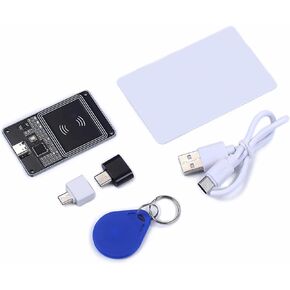 Teyleten Robot PN532 V2.0 RFID NFC Wireless Module PCB Attenna Reader Mode IC S50 CARD I2C IIC SPI HSU 1PCS
KWD 6
Teyleten Robot PN532 V2.0 RFID NFC Wireless Module PCB Attenna Reader Mode IC S50 CARD I2C IIC SPI HSU 1PCS
KWD 6
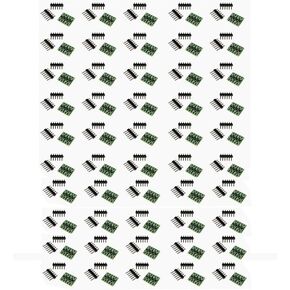 TEYELTEN ROBOT 4 قنوات مستوى المنطق محول الوحدة النمطية ثنائية الاتجاه SHIFTER I2C IIC 3.3V - 5V لـ Arduino Green 50pcs
KWD 4.500
TEYELTEN ROBOT 4 قنوات مستوى المنطق محول الوحدة النمطية ثنائية الاتجاه SHIFTER I2C IIC 3.3V - 5V لـ Arduino Green 50pcs
KWD 4.500
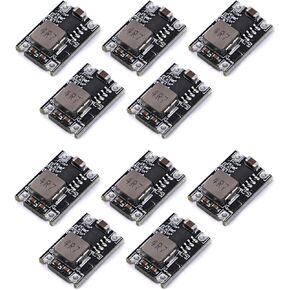 Teyleten Robot 3A Mini DC-DC Buck STOP DOWN MODULE MODULE 5V-30V إلى 3.3V DC Voltage منظم PCB POWER MODULE 10PCS
KWD 3.500
Teyleten Robot 3A Mini DC-DC Buck STOP DOWN MODULE MODULE 5V-30V إلى 3.3V DC Voltage منظم PCB POWER MODULE 10PCS
KWD 3.500

 الكويت