- Shopping, made easy.
- /
- Get the app!
Restore Safety and Full Functionality to Your Precision Multimeter
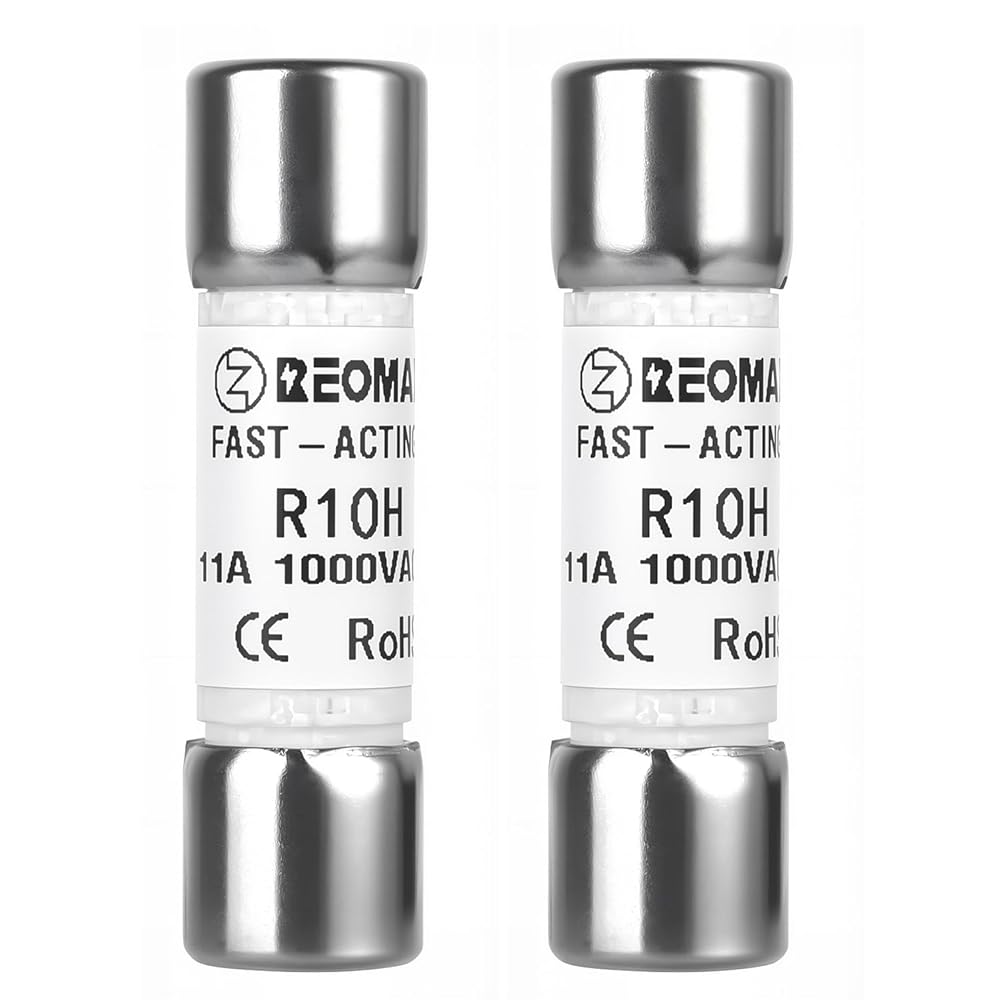
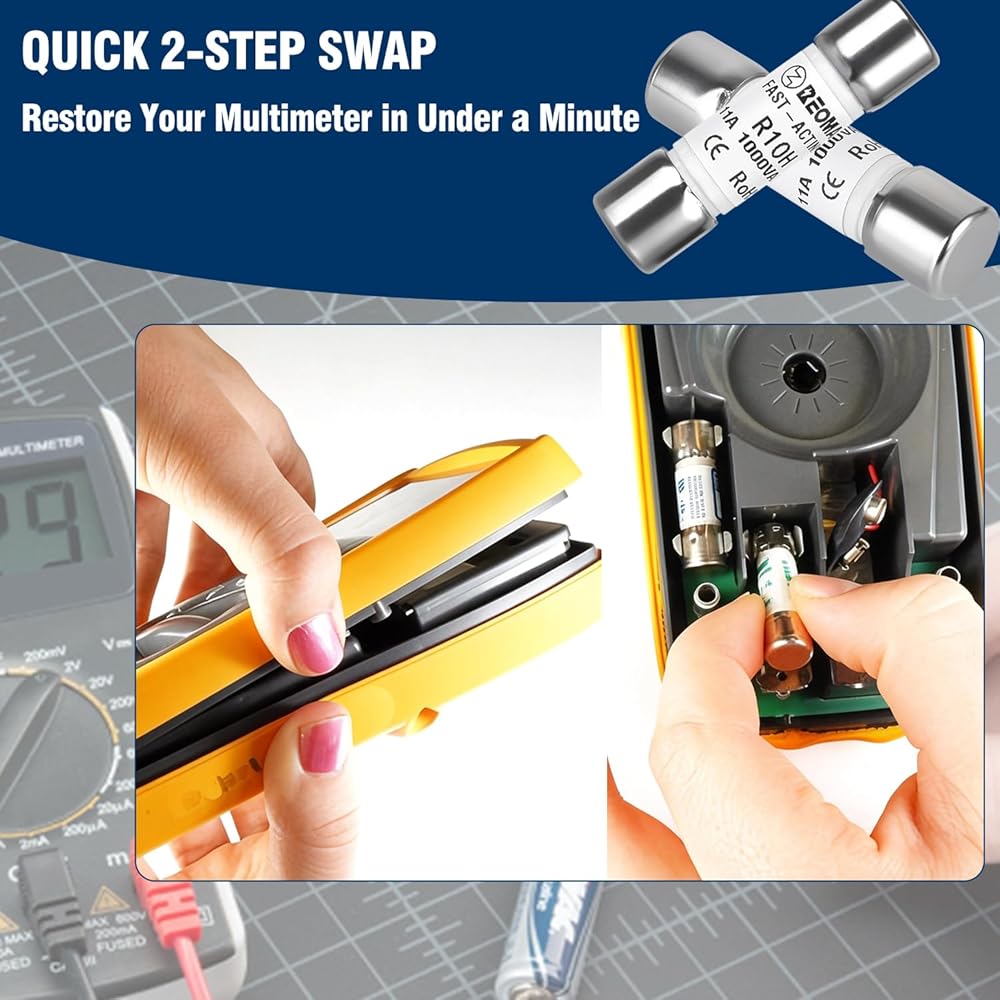
A blown fuse in your digital multimeter is more than an inconvenience—it's a critical safety component that has done its job. Using a generic or incorrect replacement fuse compromises the safety features and measurement integrity of your tool. Our DMM-11A fuse is engineered to the exact specifications required by major multimeter manufacturers, ensuring your device operates safely and accurately as intended.
Why the Right Multimeter Fuse is Non-Negotiable:
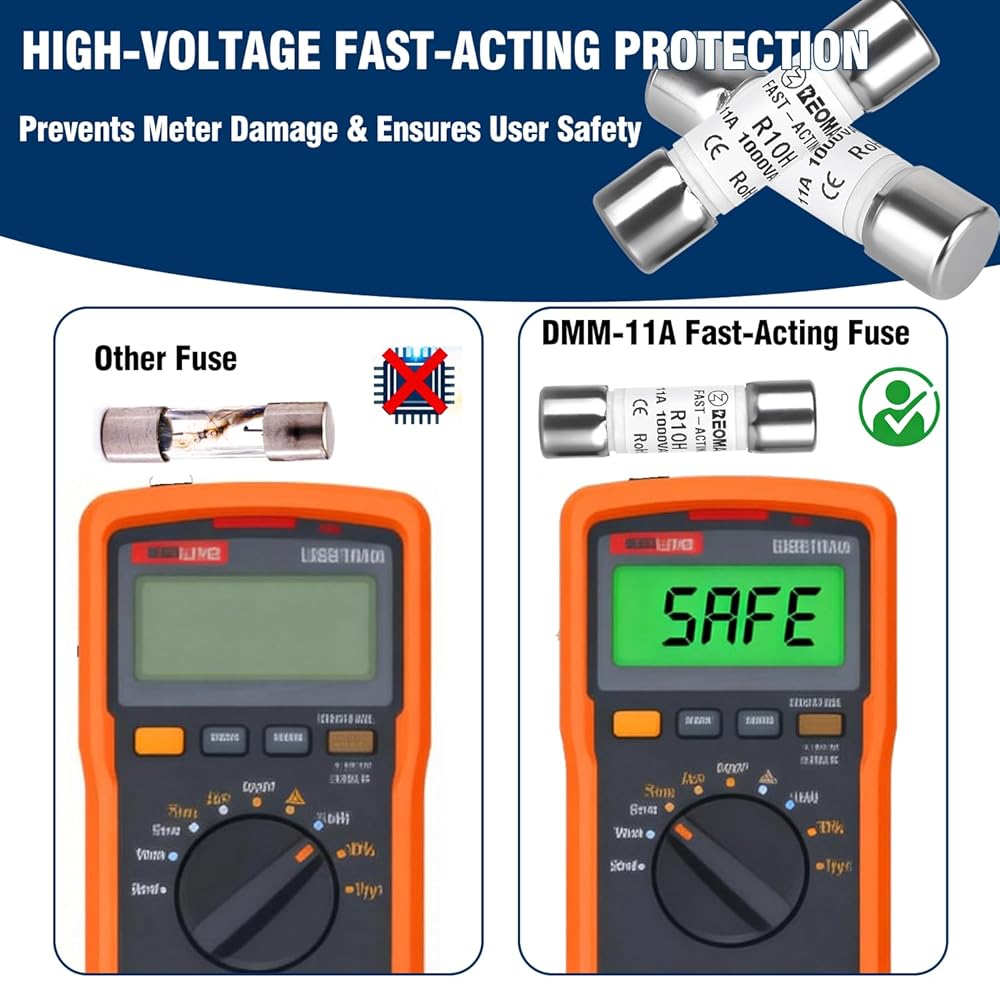
High-Voltage Protection: Multimeters are designed to measure dangerous voltages. The 1000V rating and fast-acting design of this fuse are essential to interrupt fault currents extremely quickly in high-energy circuits, protecting both the user and the meter's expensive components.
Maintains Measurement Integrity: The fuse is integral to the current measurement pathway. A fuse that doesn't meet the original specifications (in speed, resistance, or rating) can lead to inaccurate readings, potentially causing misdiagnosis in electrical work.
Prevents Meter Damage: Using a standard slow-blow or lower-voltage fuse can allow damaging energy to reach the meter's delicate internal chips and display, leading to costly repairs or complete failure.
Exact Specifications for a Perfect Match:
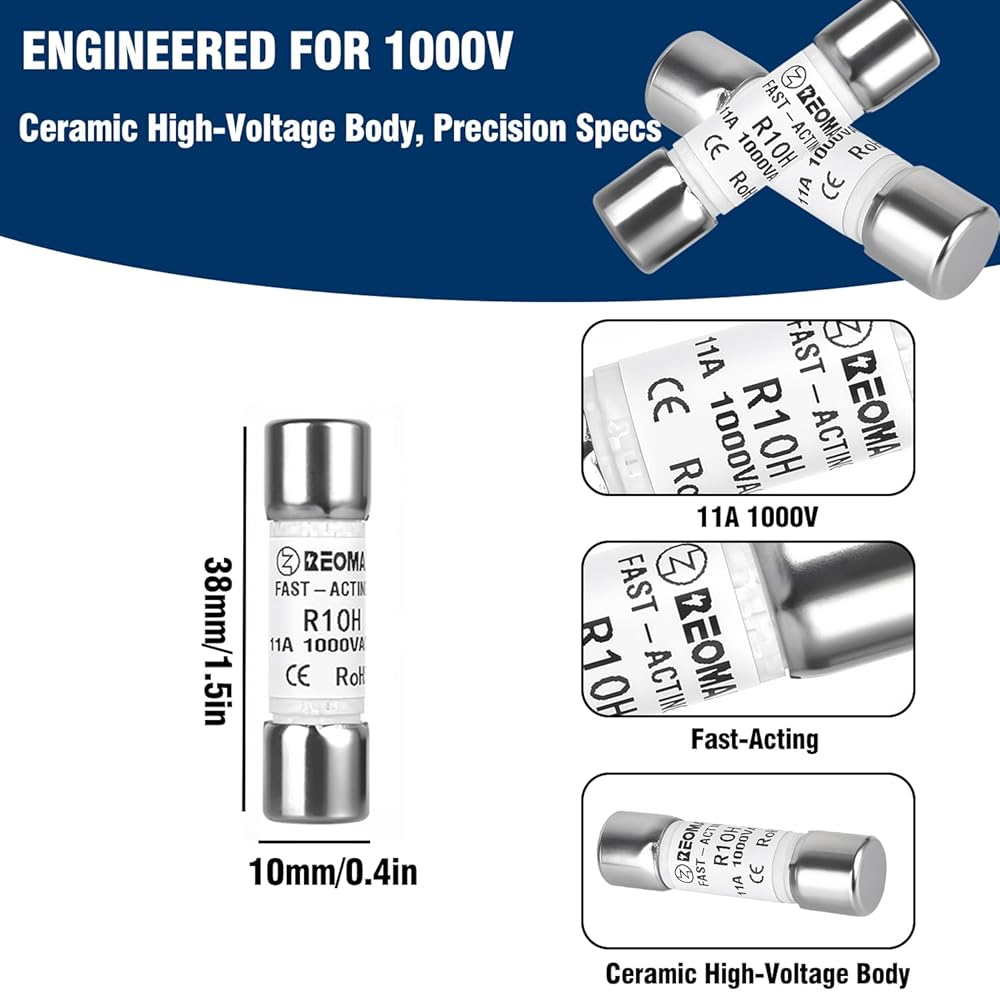
Parameter Specification
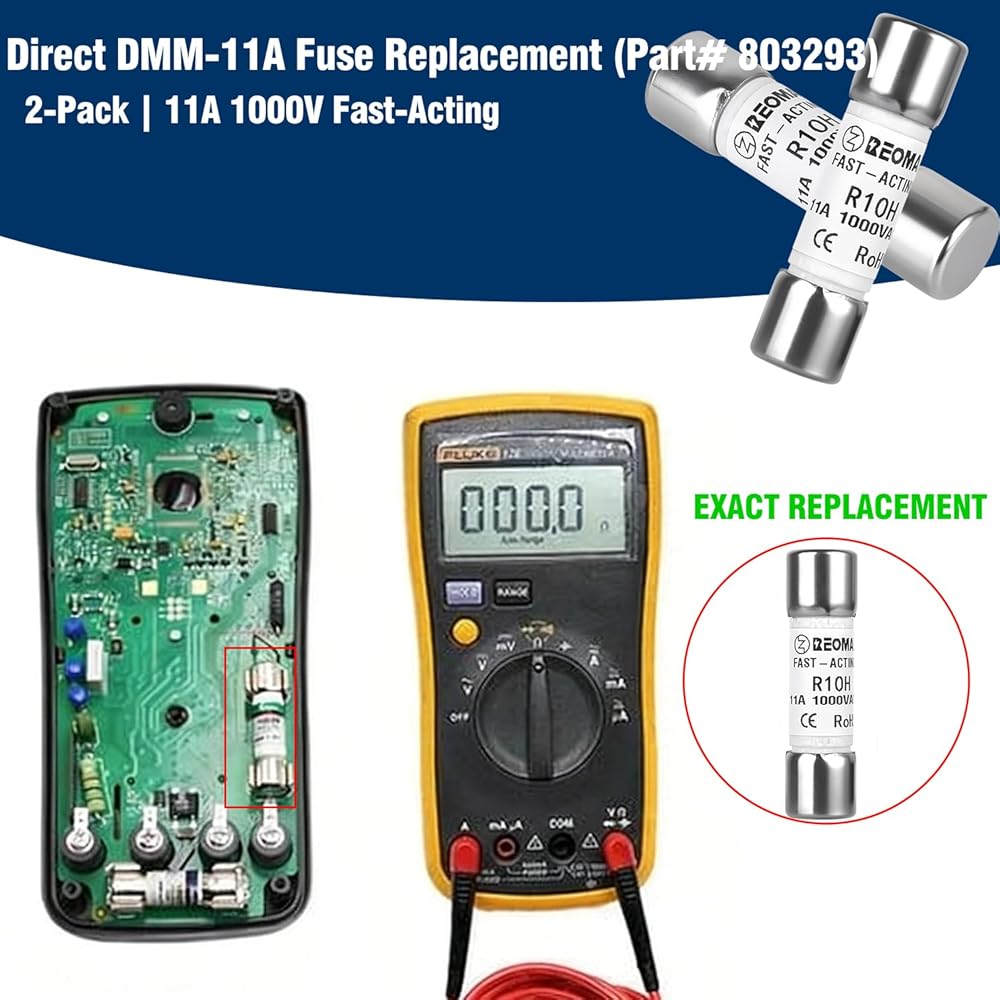
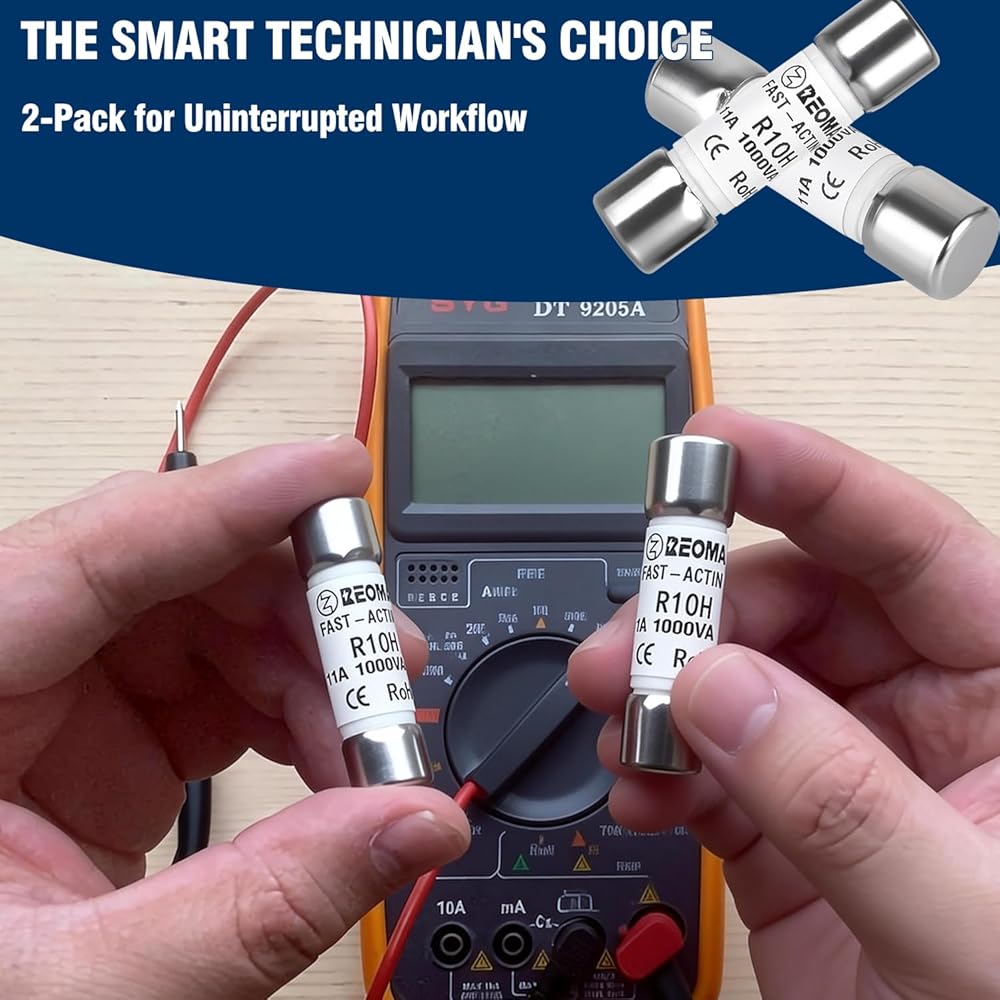
Fuse Type / Part Number DMM-11A (Replaces common part # 803293)
Rated Current (I) 11 Amps (11A) Fast-Acting
Rated Voltage (U) 1000 Volts AC/DC (1000V)
Dimensions (D x L) 10mm x 38mm (0.41" x 1.50")
Package Quantity 2 Fuses
⚠️ CRITICAL INSTALLATION & SAFETY WARNING:
Working inside a multimeter exposes you to potential electrical hazards if not done correctly. If unsure, have the fuse replaced by a qualified professional.
POWER OFF & DISCONNECT: Ensure the multimeter is turned OFF and all test leads are disconnected from any circuit and the meter itself.
REMOVE BATTERIES: Always remove the multimeter's batteries before opening the case to access the fuse compartment.
IDENTIFY THE CORRECT FUSE SLOT: Many meters have two or more fuses (e.g., for high-current and low-current inputs). Consult your owner's manual to identify which fuse needs replacement (typically for the 10A current jack).
PERFORM VISUAL INSPECTION: Check the old fuse. A blown fuse will often have a broken filament or discolored/melted glass window. Ensure the new fuse is visually identical.
INSTALL & TEST: Carefully insert the new DMM-11A fuse into the holder. Reinstall the batteries, close the case, and test the meter's continuity or resistance function on a known-good circuit (like a resistor) to verify basic operation.
Who Needs This Fuse?
Electronics Technicians & Electricians: For whom a working meter is essential for daily safety and work.
Industrial Maintenance Personnel: To keep facility troubleshooting tools operational.
STEM Educators & Students: To maintain lab equipment for safe learning.
HVAC/R Technicians, Automotive Diagnosticians, and Serious DIYers: Anyone who relies on a multimeter for accurate measurements.
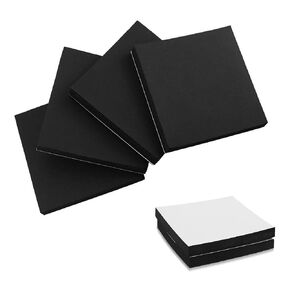 Foam Padding Sheets with Adhesive Backing - 1/4" Thick Self Stick Neoprene Insulation Foam,1/4 Inch Thick X 4 Inch Long X 4 Inch Wide (4, 1/4Inch x 4Inch x 4Inch)
KWD 0
Foam Padding Sheets with Adhesive Backing - 1/4" Thick Self Stick Neoprene Insulation Foam,1/4 Inch Thick X 4 Inch Long X 4 Inch Wide (4, 1/4Inch x 4Inch x 4Inch)
KWD 0
 -13%
Price Tags with String Attached - 500 Pcs Marking Merchandise Strung Tag Writable Label Small Hang Tag for Pricing Jewelry Clothing, Sale Tags, Paper Tags for Retail (55 x 35 mm)
KWD 3.500
-13%
Price Tags with String Attached - 500 Pcs Marking Merchandise Strung Tag Writable Label Small Hang Tag for Pricing Jewelry Clothing, Sale Tags, Paper Tags for Retail (55 x 35 mm)
KWD 3.500
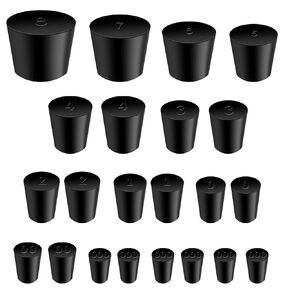 Rubber Stopper - 22 Pcs Solid Rubber Stoppers,11 Assorted Sizes 000# - 8# Tapered Lab Seal Rubber Stoppers
KWD 0
Rubber Stopper - 22 Pcs Solid Rubber Stoppers,11 Assorted Sizes 000# - 8# Tapered Lab Seal Rubber Stoppers
KWD 0
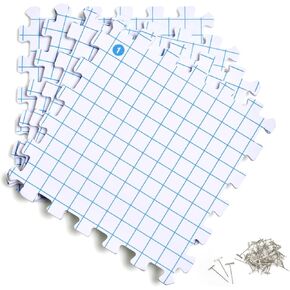 Interlocking Blocking Mats - Blocking Mats for Knitting and Crochet Projects, 4-Pack 12'' W x 12'' L Knitting Blocking Mats with 50 T-Pins
KWD 6
Interlocking Blocking Mats - Blocking Mats for Knitting and Crochet Projects, 4-Pack 12'' W x 12'' L Knitting Blocking Mats with 50 T-Pins
KWD 6