- التسوق ، اصبح سهلا.
- /
- احصل على التطبيق!


The 1:1 shortwave balun is made with well-known magnetic rings and 50-3 Teflon feeders, featuring low insertion loss, low standing wave and high power. The joint is waterproof. There are fixing screw holes on the back and three hanging wire holes on the top, suitable for various installation methods.
Features: It requires a 2.5-square-meter cable, 4 frequency bands up to 20m/65.6ft, 8 frequency bands up to 40.4m/132.5ft, and the ability to adjust the frequency points suitable for use
Input Impedance:50Ω
Frequency Range:1-54MHz
Maximum Power:
SSB
CW.FT8.FM.AM.FSK
Impedance Ratio:1:1
Antenna Introduction
This antenna consists of a 1:1 impedance converter and 20 meters or 40.7 meters (the length of the oscillator can be adjusted through the antenna analyzer). It is a 4-band and 8-band shortwave single-ended feed antenna, belonging to multi-band and multi-directional antennas. Due to its single-ended power supply, it is easy and quick to install, and its concealment is not easy to be detected. It is particularly suitable for urban installation, outdoor installation, etc.
Installation requirements
Due to its multi-directivity, when installing the antenna, only an open and spacious area needs to be selected, and there is no need to consider its directionality issue. Non-metallic ropes must be used at both ends of the antenna. Metal wire ropes are not allowed, otherwise it will affect the parameters of the antenna. Within the full length of the antenna, it must be at least 3 meters away from obstacles (including walls, trees, leaves and non-metallic materials). If encountering metal objects (such as wires, Windows, railings, etc.), it is necessary to maintain a distance of at least 5 meters to achieve the ideal state. It is best to stand a little higher and be able to pull horizontally, vertically or diagonally.
Regarding the issue of the ground grid
End-feed antennas usually do not need to use ground grids when using single sideband (SSB). For instance, when using data connections such as FT8 and FT4 that may cause interference to other devices, an external ground network can be employed. Specifically, connect a single-strand wire 1-2 meters long to the network cable at the converter connector, allowing it to hang naturally without grounding. However, installing the grounding grid will cause displacement at each resonant point, and an antenna analyzer needs to be used to adjust the length of the oscillator for correction. If necessary, the length of the grounding grid should be shortened to reduce the problem of displacement at the resonant point and achieve a win-win situation.
 هوائي الماسح الضوئي التلسكوبي RK-WORKMAN SCAN1 مع قابس موتورولا من أجل ريجنسي واقعي
KWD 7.500
هوائي الماسح الضوئي التلسكوبي RK-WORKMAN SCAN1 مع قابس موتورولا من أجل ريجنسي واقعي
KWD 7.500
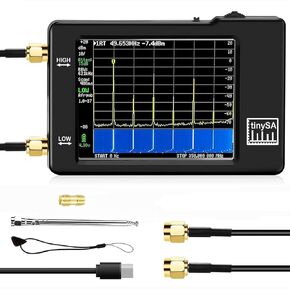 محلل طيف TinySA، محلل طيف صغير محمول بشاشة لمس 2.8 بوصة، محلل تردد محمول 0.1 ميجاهرتز ~ 960 ميجاهرتز مع 4 أوضاع إدخال/إخراج، مولد إشارة 2 في 1 مع بطارية
KWD 25.500
محلل طيف TinySA، محلل طيف صغير محمول بشاشة لمس 2.8 بوصة، محلل تردد محمول 0.1 ميجاهرتز ~ 960 ميجاهرتز مع 4 أوضاع إدخال/إخراج، مولد إشارة 2 في 1 مع بطارية
KWD 25.500
 هوائي HF لراديو هام PAC 12، هوائي راديو كامل النطاق على الموجات القصيرة 7 ميجا هرتز-50 ميجا هرتز مع مقاومة متغيرة منزلق، 8 تردد نطاق خارجي JAC 12 طقم هوائي محمول
KWD 57
هوائي HF لراديو هام PAC 12، هوائي راديو كامل النطاق على الموجات القصيرة 7 ميجا هرتز-50 ميجا هرتز مع مقاومة متغيرة منزلق، 8 تردد نطاق خارجي JAC 12 طقم هوائي محمول
KWD 57
 -6%
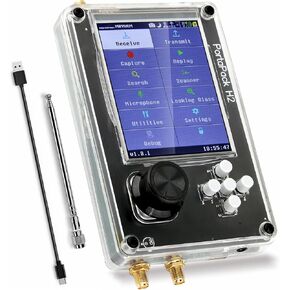
مجموعة راديو Portapack H2 المحددة بالبرمجيات مع هوائيات، 3.2 بوصة TFT 1 ميجا هرتز - 6 جيجا هرتز، جهاز إرسال واستقبال لاسلكي احترافي، غلاف ABS، إعادة الالتقاط لجهاز إرسال واستقبال راديو الاتصالات
KWD 94
-6%
مجموعة راديو Portapack H2 المحددة بالبرمجيات مع هوائيات، 3.2 بوصة TFT 1 ميجا هرتز - 6 جيجا هرتز، جهاز إرسال واستقبال لاسلكي احترافي، غلاف ABS، إعادة الالتقاط لجهاز إرسال واستقبال راديو الاتصالات
KWD 94