- التسوق ، اصبح سهلا.
- /
- احصل على التطبيق!
Manual for FREESPACE THE GREAT WAR computer game
Over the years a variety of space-combat simulations have been released, but none of them has been as polished or even remotely as interesting as LucasArts' X-Wing series or Origin Systems' Wing Commander series, both of which are still going strong. With the enticing capabilities of 3D graphics hardware support and a general resurgence in science fiction themes, it was only a matter of time before gaming companies would, once again, try to break LucasArts' and Origin Systems' collective stranglehold over the genre. At last a worthy challenger has arrived. Descent: Freespace is one of a number of recently released or announced space-sim titles from developers who are better known for creating successful gaming series in other genres.
When the plot of Descent: Freespace begins, the ever-warmongering Terrans are in the midst of a 14-year misunderstanding with the Vasudans. While the Vasudans and the Terrans are fairly evenly matched, they quickly put aside their differences when a third race appears, the technologically superior Shivans. Although a rebel Vasudan faction continues to harass the new Vasudan-Terran alliance, the main threat comes from the Shivans and their monstrous capital ship, the Lucifer. From the opening animated cutscene, Descent: Freespace does an excellent job at maintaining the aura of the Shivans as a mysterious, unstoppable force. When you first encounter the Shivans, you won't even be able to target their jet-black ships, and the weapons that seemed so impressive against the Vasudans will barely make an impression on the Shivans and their seemingly invulnerable shields. At first you have to avoid direct conflicts with the superior Shivans and instead embark on missions to steal their technology in order to improve the capabilities of your ships. In fact, there's a real X-COM feel to the game, as you uncover the mysteries of the Shivans and constantly improve the technology of your ships and weaponry.
Very little about Descent: Freespace is entirely original, but the developers did an admirable job at extracting the best features from previous spaces sims. Everything from the "sink the behemoth" branching plot to the stylish interface, mission briefings, and graphics appears to be plucked from other games of the genre, but improved. In many ways, the graphics closely resemble those used in Wing Commander Prophecy and make especially good use of colored lighting, shielding, lens flare, and engine blast effects.
Combat in Descent: Freespace also more closely resembles the fast-paced, missile-blasting, afterburner sliding frag fests of the Wing Commander series than the World War II style of combat favored by the Star Wars sims. Descent: Freespace is probably the most missile-intensive game yet seen in the genre, but fortunately single missile hits aren't usually too destructive to your ship. Afterburners can only be utilized in short bursts, requiring you to tactically reserve them for when they are most useful.
The customizable interface of Descent: Freespace is outstanding - easily the best yet seen in the genre. The interface was clearly designed to make useful information, such as the status of escorted ships, the direction and the distance of approaching missiles, mission objectives, and the condition of your wingmen, constantly available on your screen.
The plot of Descent: Freespace advances through animated cutscenes, periodic "news" updates on the status of the war, as well as through mission briefings and the occasional scripted mission event. Overall, these methods combine to provide a compelling, if somewhat disjointed, storyline.
There are approximately 30 single-player missions in the branching campaign and 20 multiplayer missions. The mission objectives are nicely varied and include "kill 'em all" missions, stealthy inspection missions, a mission that resembles a giant game of Asteroids, and some epic capital ship confrontations near the end of the game. Descent: Freespace automatically saves after each campaign mission, and you can't independently save the game, which is a bit disappointing, since it prevents you from exploring the various campaign "branches" without restarting the entire campaign.
Multiplayer support for up to 12 players is included either through a TCP/IP network or the Internet through the free Parallax Online servers. Parallax Online keeps detailed pilot statistics and is an extremely streamlined service, with an intuitive interface and seamless integration with the multiplayer interface of Descent: Freespace. Unfortunately, even after two patches, most gamers will find a multiplayer game of Descent: Freespace over the Internet to be completely unplayable due to lag. Unlike first-person shooter games, where an environment's walls and a player's line of sight will naturally limit the number of objects that a client has to keep track of at any one time, the open areas of space-combat simulations have historically proven very difficult to use as online multiplayer arenas. Multiplayer support was eventually removed from Wing Commander Prophecy because Origin wasn't satisfied that it would work well, and even earlier in that game's development Internet multiplayer support was removed. Even X-Wing vs. Tie Fighter limits multiplayer support to four players over Microsoft's Internet Gaming Zone. In that context, it's astonishing that Interplay and Volition were, almost until the game was released, advertising Descent: Freespace as capable of supporting 16 players online, when in fact the retail version of the game is currently incapable of even adequately supporting two players each using 56K modems.
Still, unless you are only looking for a multiplayer dogfighting area (in which case you'll be doubly disappointed, since deathmatch support was removed late in development entirely, in favor of cooperative and team vs. team missions) there's a lot to like about Descent: Freespace. It's a noble effort to both cannibalize the best elements of classics of the genre and also provide a number of refreshing innovations. While Descent: Freespace isn't quite the standout game it could have been, it's a welcome step in the right direction for the genre. Highly recommended. --Desslock
--Copyright ©1998 GameSpot Inc. All rights reserved. Reproduction in whole or in part in any form or medium without express written permission of GameSpot is prohibited. -- GameSpot Review
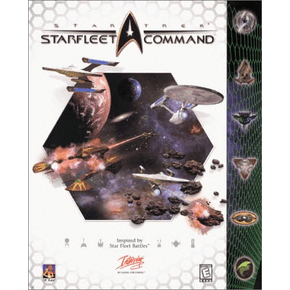 ستار تريك: ستار فلييت كوماند - الكمبيوتر الشخصي
KWD 11
ستار تريك: ستار فلييت كوماند - الكمبيوتر الشخصي
KWD 11
 بوابة بلدور الثانية: ظلال آمون وعرش بهال (السويد)
KWD 5
بوابة بلدور الثانية: ظلال آمون وعرش بهال (السويد)
KWD 5
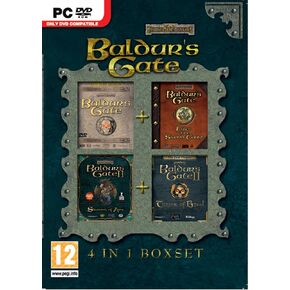 -10%
مجموعة بوابة بلدور (الاتحاد الأوروبي)
KWD 4.500
-10%
مجموعة بوابة بلدور (الاتحاد الأوروبي)
KWD 4.500
 ريد اسفولت - بلاي ستيشن
KWD 31
ريد اسفولت - بلاي ستيشن
KWD 31