- التسوق ، اصبح سهلا.
- /
- احصل على التطبيق!
One:Product introduction
The bidirectional signal amplification module is suitable for micro-power wireless products in the 902MHz-928MHz frequency band. It can be applied to 902MHz-928MHz wireless data collection systems and other scenarios
Two:performance characteristics
1. Built-in intelligent transmit/receive discrimination circuit, no front-end equipment is required to provide receive/transmit switching control signals
2. The module works in the receiving state by default to amplify the received signal. When it is detected that the front-end device transmits a signal to the outside, it instantly switches to the transmission amplification state
3. The transmit gain can be adjusted manually, making it convenient to be compatible with wireless devices with different transmit powers
4. The receiving/transmitting link has a very high degree of isolation, and the receiving link can withstand strong external interference without causing the loop to self-excite
5. Compatible with LORA and FSK/ASK/OOK/MSK/GFSK and other modulation methods
6. The default operating frequency band is 902MHz-928MHz, and it can also be applied to any frequency band between 700MHz-1400MHz by adjusting the parameters (bandwidth 40MHz)
Three:Specifications
Working frequency band: 902MHz-928MHz
Receive Gain: 11dB ± 2dB
Receiving noise figure: ≤ 2.0dB
Transmission gain: 5dB-11dB (± 2dB) adjustable
Transceiver switching threshold: -2dBm
Input power range: 1dBm-20dBm
Maximum transmit power: 31dBm (1.3w)
Working status indication: Receiving status: green light on, blue light off Launch status: blue light on, green light off
In TDD working mode, the blue light and the green light will flash alternately
Working voltage: 5V (4.75V-5.25V)
Working current:
RX state: 10mA (± 3mA)
TX state: ≤ 720mA
Dimensions: 49mm * 26.2mm * 9mm (L * W * H) excluding SMA size
Since the maximum transmission gain of the module is about 11dB, if the actual output power of the module can reach the maximum value, the output power of the front-end device must be sufficient. For example, if the actual output power of the front-end device is to reach 34.5dBm at a 6.0V supply voltage, the output power of the front-end device must reach 23.5dBm (23.5 + 11 = 34.5). If the output power of the front-end device is only 10dBm, the actual output of the module can only reach 21dBm, not 34.5dBm. Please be sure to note this.
Under normal circumstances, it is not recommended to transmit with maximum gain (power), because the higher the transmission power, the greater the power consumption and heat generation. If the power consumption is high, it is extremely unfavorable for battery-powered devices. In actual use, it is recommended to adjust the gain while testing the coverage, so that it can just meet the actual coverage requirements and have a slight surplus
In order to ensure reliable switching, the transmit power of the front-end device needs to be reserved for at least 3dB margin, that is, the minimum transmit power of the front-end device cannot be lower than 1dBm, otherwise it may lead to unstable switching
Most of the timing of the module is in the receiving state, and the current in the receiving state is about 10mA. When the module switches to the transmitting state and transmits at the maximum power, the instantaneous current can reach up to 1.5A. Because the transmission timing is generally very short (under normal circumstances, each group of data packets is ms or even us level), the average current is generally not higher than 200mA throughout the working period
Warning: Modules cannot be used with walkie-talkies
Four:Transmit gain adjustment method (adjusted to a maximum of 11dB)
When the potentiometer turns counterclockwise to the bottom, the emission gain is 5 dB
The emission gain of the potentiometer when it is turned to the bottom along the pointer is 11 dB
 2 حزمة ESP32 LORA V3 لوحة تطوير + 4000 مللي أمبير في الساعة بطارية + مجموعة كابلات شاحن USB - مع 915MHz هوائي WiFi Bluetooth و SX1262 Lora V3 لأجهزة Meshtastic Arduino Lorawan IOT
KWD 12.500
2 حزمة ESP32 LORA V3 لوحة تطوير + 4000 مللي أمبير في الساعة بطارية + مجموعة كابلات شاحن USB - مع 915MHz هوائي WiFi Bluetooth و SX1262 Lora V3 لأجهزة Meshtastic Arduino Lorawan IOT
KWD 12.500
 3.7 فولت بطارية Lipo 1800mAh 103450 بطارية البوليمر الليثيوم القابلة لإعادة الشحن مع دائرة حماية متكاملة للموصل PH2.0 للجهاز الإلكتروني Meshtastic Rak19007 + Rak4631 (2 Pcs)
KWD 4
3.7 فولت بطارية Lipo 1800mAh 103450 بطارية البوليمر الليثيوم القابلة لإعادة الشحن مع دائرة حماية متكاملة للموصل PH2.0 للجهاز الإلكتروني Meshtastic Rak19007 + Rak4631 (2 Pcs)
KWD 4
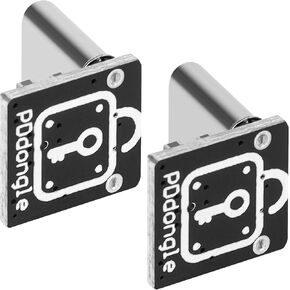 2pcs لـ Raspberry Pi 5 Dongle المخصص PD ، للتوت PI 5 Power C PORT PD PORT PORT USB Current
KWD 4.500
2pcs لـ Raspberry Pi 5 Dongle المخصص PD ، للتوت PI 5 Power C PORT PD PORT PORT USB Current
KWD 4.500
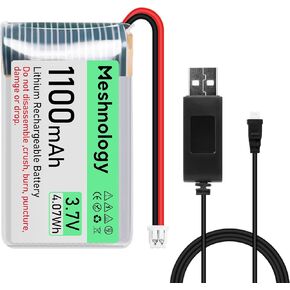 4pcs 3.7v 1100mah li بطارية مع كابل شاحن USB 102540 1S Lipo بطارية مع شريط حماية معزول شريط المطاط و micro JST 1.25 قابس Arduino ESP32 لوحة Drone RC Car
KWD 4.500
4pcs 3.7v 1100mah li بطارية مع كابل شاحن USB 102540 1S Lipo بطارية مع شريط حماية معزول شريط المطاط و micro JST 1.25 قابس Arduino ESP32 لوحة Drone RC Car
KWD 4.500