- التسوق ، اصبح سهلا.
- /
- احصل على التطبيق!
The STEM attribute of vacuum cleaner toys is essentially to use the game goal of "absorbing cleaning" to transform abstract STEM concepts (air pressure, machinery, problem solving, quantity) into concrete behaviors of "operable, observable, and solveable", so that children can naturally use STEM thinking in the process of "exploring for absorbing debris", rather than deliberately learning knowledge.
1. Science: Focus on the concrete cognition of "force and air pressure".
The core is to let children intuitively perceive 2 basic physical principles through the "absorbing" action:
Principle of air pressure difference: manual/electric structure manufacturing "low pressure inside toys", children can see "air flow drives debris to be sucked in" and understand "pressure difference drives objects to move";
Force and motion relationship: By adjusting the pushing force and the angle of the nozzle, we perceive the "magnitude/direction of the force affects whether debris are sucked up", and establish a preliminary understanding of "force changes the state of motion".
2. Technology: Focus on the corresponding thinking of "tool structure and function".
The core is to let children understand that "technology is the design of 'structural service function'":
Functional relationship of core components: identify the “structure-function” correspondence between the suction nozzle (fitting to the ground / deep into the gap), the filter (filtering debris to prevent blockage), and the power unit (pressing / electric to provide suction);
3. Engineering: Focus on "the practical closed loop of problem solving".
The core is to let children experience the engineering thinking process of "design-test-optimization":
Structural assembly: assemble parts in logical order to complete "structural construction that satisfies functions";
Scenario-based problem solving: In response to the problem of "not absorbing the gap", the "problem-solution" optimization solution is implemented through the "replacement of suction nozzles".
4. Mathematics: Focus on "number/natural penetration of space".
The core is to let children unconsciously get involved in mathematical concepts driven by goals:
Quantity and statistics: count the quantity before and after cleaning, perceive quantity, addition and subtraction; classify by material/color, and establish statistical logic;
Space and measurement: judge the orientation of the foam ball (left / bottom), adjust the direction of movement, and understand the space; compare the correlation between the nozzle length, number of presses and suction force, and perceive the measurement and correlation.

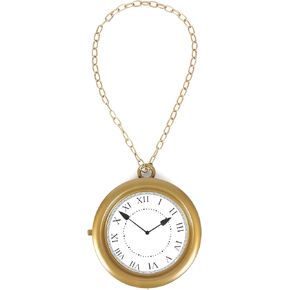 1 قطعة قلادة أرنب أبيض ، قلادة على مدار الساعة ، ملحقات زي قلادة أرنب بيضاء
KWD 6
1 قطعة قلادة أرنب أبيض ، قلادة على مدار الساعة ، ملحقات زي قلادة أرنب بيضاء
KWD 6
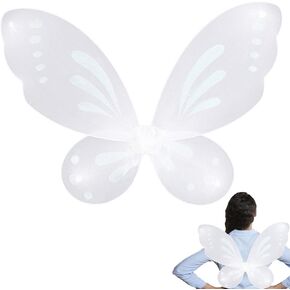 أجنحة الجنية للبنات ، جناح الفراشة الخيالية لحفلة Birhday ، Farkle Angel Wings Assume Assume Up Up Up
KWD 4.500
أجنحة الجنية للبنات ، جناح الفراشة الخيالية لحفلة Birhday ، Farkle Angel Wings Assume Assume Up Up Up
KWD 4.500
 إكسسوارات الأميرة تضيء عصا ولي العهد الأميرة تيارا للفتيات الصغيرات ، 7pcs طفل صغير ملحقات سوار قلادة القلادة.
KWD 4.500
إكسسوارات الأميرة تضيء عصا ولي العهد الأميرة تيارا للفتيات الصغيرات ، 7pcs طفل صغير ملحقات سوار قلادة القلادة.
KWD 4.500
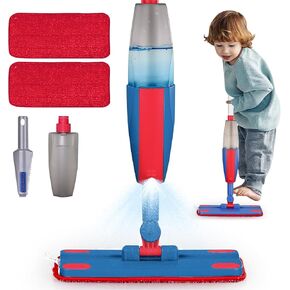 Kids Spray Mop real with prayer + 2pcs mop pads ، Toddler Cleaning Tool Works Real for Wresisticietic Cleaning Cleaning Play Play Toys Montessori mini mop & sweeper للأطفال الذين تتراوح أعمارهم بين 3+
KWD 12.500
Kids Spray Mop real with prayer + 2pcs mop pads ، Toddler Cleaning Tool Works Real for Wresisticietic Cleaning Cleaning Play Play Toys Montessori mini mop & sweeper للأطفال الذين تتراوح أعمارهم بين 3+
KWD 12.500