- التسوق ، اصبح سهلا.
- /
- احصل على التطبيق!
Water Pumps
Multi Flow Syringe Pump 24V Stepper Motor High Precision
Lab Piston Pump RS-485 Communication
KSY30-V01is a compact product for precision fluid control, it supports RS485, RS232 and other control methods. It can automatically complete functions such as pipetting, diluting and dispensing.
Syringe pumps have the following advantages over peristaltic pumps:
Injection injection accuracy is an order of magnitude higher than that of peristaltic pumps
Syringe pumps do not have the pulsation problem of peristaltic pumps
Technical parameters
Technical Parameters
KSY30-V01 Piston pump
Accuracy
1.0%(1 ml syringe and above)
Precision
Max pressure reference value of the liquid circuit
Positive pressure:0.7Mpa
Negative pressure 0.08Mpa
Liquid material
Borosilicate glass, PTFE, PCTFE
Rated stroke
30mm
Running time(per rated stroke)
1.26s-1200s
Syringe interface
1/4-28 internal thread interface
Syringe configuration
50uL, 100uL, 250uL, 500uL, 1mL, 2.5mL, 5mL
Syringe material
Borosilicate glass, stainless steel pushrod, PTFE
Transmission structure
Ball screw drive
Control steps and resolution
(standard mode)
Full stroke 3000 steps, control resolution is 0.01mm per step
Control steps and resolution
(micro step mode)
Full stroke 48000 steps, control resolution is 1 step 0.625um
Valve shift time
250ms (between two adjacent ports)
Valve type
Standard: 3-port Y-valve, : 3-port split valve, 4-port valve, T-valve, straight-through valve or no valve
The Max pressure reference value of the hydraulic circuit
0.68Mpa
Pipeline interface
1/4-28 internal thread interface
Communication Interface
RS485 or RS232 or CAN bus, external control input and output
Agreement
Data terminal, protocol (serial port) or CAN bus
Communication rate
9600bps or 38400bps (RS485 or RS232)
CAN bus
100 KB, 125 KB 250 KB, 500 KB or 1MB (custom features)
Communication parameters
Data bits: 8; Parity: None; Stop bits: 1 Half-duplex
Topology networking
Support up to 15 pumps network, support grouping and individual control
Online upgrade function
Program can be upgraded online through PC without special equipment
Change function
The piston determines the zero position through the switch
Pause function
Adding the "h" command can make the piston stop during operation; it can continue to execute through "R" or "r" to realize the interactive control of the equipment
Micro step mode function
The micro-step operation mode can be set, and the micro-step mode adopts 8 subdivisions or 16 subdivisions technology, with a total of 48000 micro steps in the whole process
Programming ability
Programmable ramp/cutoff speed/piston speed/backlash compensation/storable instruction sequences, delays and cycles, terminate motion, diagnostics, absolute or relative position
Working temperature
The recommended ambient temperature is 15°C ~ 40°C, low temperature operation needs to be equipped with a low temperature syringe
Working environment relative humidity
Storage ambient temperature
-20-65
Storage environment relative humidity
Noise
55dB
Voltage
24V; MAX 1.6A
Size(L*W*H)
133.6*44.5*127mm(Including pump head)
Weight
About 894g
Including the pump head
Diagram of main components
Valve line interface
valve
syringe
Piston pusher
Piston set screw
valve motor
Piston drive motor
The ball screw driven by the stepping motor drives the piston push-pull, and the syringe piston is linked with the piston push-pull. The syringe plunger has a full stroke of 30mm, divided into 3000 steps with a resolution of 1 step, or 24000 steps if the microstep mode is on.
The piston is fixed on the piston push-pull by the piston fixing screw. The top of the needle is connected to the valve with a 1/4"-28 thread. Syringe Composition Anatomy:
The valve consists of a PCTFE body and a PTFE . The spool rotates in the valve body to communicate with the syringe port and various input and output ports. valve adopts step
Driven by the motor, the position is detected by the encoder.
3-port Y-valve composition
The printed circuit board contains the MCU and control circuitry to drive the syringe plunger and valve. The external interface provided by PCBA consists of DIP switch for selecting different operation modes, address setting switch, and DB15 external control socket. Different communication modes can be selected through DIP switches.
DB-15 pin definition
Pin
Function
Note
1 24V
2 RS-232 TxD line
Output data
3 RS-232 RxD line
Input data
4 reserved
5 CAN high signal line
6 CAN low signal line
7 Auxiliary input#1
TTL level
8 Auxiliary input #2
TTL level
9 Ground
Power and Logic
10
Ground
Power and Logic
11
RS-485 A line
Data+
12
RS-485 Bline
Data-
13
Auxiliary output #1
TTL level
14
Auxiliary output #2
TTL level
15
Auxiliary output #3
TTL level
Communication Interface
According to the configuration of the device, through RS485/RS232 interface or CAN bus interface. The device can be used alone or with multiple machines, and supports baud rates of 9600 and 38400.
The RS232 of this device does not support hardware handshaking and only needs three wires: RXD, TXD and signal ground. And before connecting or disconnecting the communication bus, the power supply of the device must be disconnected first.
The figure below shows the RS-232 and RS485 wiring methods in multi-device communication respectively.
 ITECH مصدر طاقة تيار متردد 300 فولت/3 أمبير/300 فولت أمبير قابل للبرمجة، مصدر طاقة تيار متردد أحادي الطور قابل للتعديل مع تقنية التضخيم الخطي، تردد متغير IT7321
KWD 552
ITECH مصدر طاقة تيار متردد 300 فولت/3 أمبير/300 فولت أمبير قابل للبرمجة، مصدر طاقة تيار متردد أحادي الطور قابل للتعديل مع تقنية التضخيم الخطي، تردد متغير IT7321
KWD 552
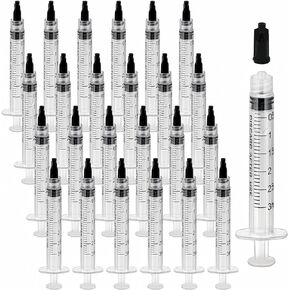 30 عبوة من حقنة بلاستيكية 2 مل غلاف فردي معقم (بدون إبرة)، محاقن قفل Luer مع غطاء، قياس للمختبرات العلمية، قياس السوائل، تغذية الحيوانات الأليفة، أداة وضع الزيت أو الغراء (2 مل، بلاستيك)
KWD 4
30 عبوة من حقنة بلاستيكية 2 مل غلاف فردي معقم (بدون إبرة)، محاقن قفل Luer مع غطاء، قياس للمختبرات العلمية، قياس السوائل، تغذية الحيوانات الأليفة، أداة وضع الزيت أو الغراء (2 مل، بلاستيك)
KWD 4
 HUWAZINE lab ماصة طرف 10 مل، عالمي، قابل للتعقيم، مع فلتر، شفاف، 96 طرف لكل رف (T10ML-RSF-24)
KWD 6
HUWAZINE lab ماصة طرف 10 مل، عالمي، قابل للتعقيم، مع فلتر، شفاف، 96 طرف لكل رف (T10ML-RSF-24)
KWD 6
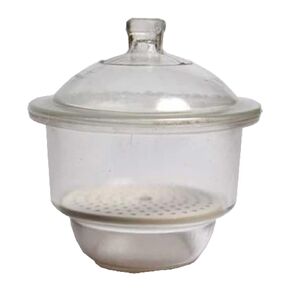 المتحدة العلمية للتوريدات DSGL210 مجفف زجاجي، 210 ملم
KWD 49.500
المتحدة العلمية للتوريدات DSGL210 مجفف زجاجي، 210 ملم
KWD 49.500