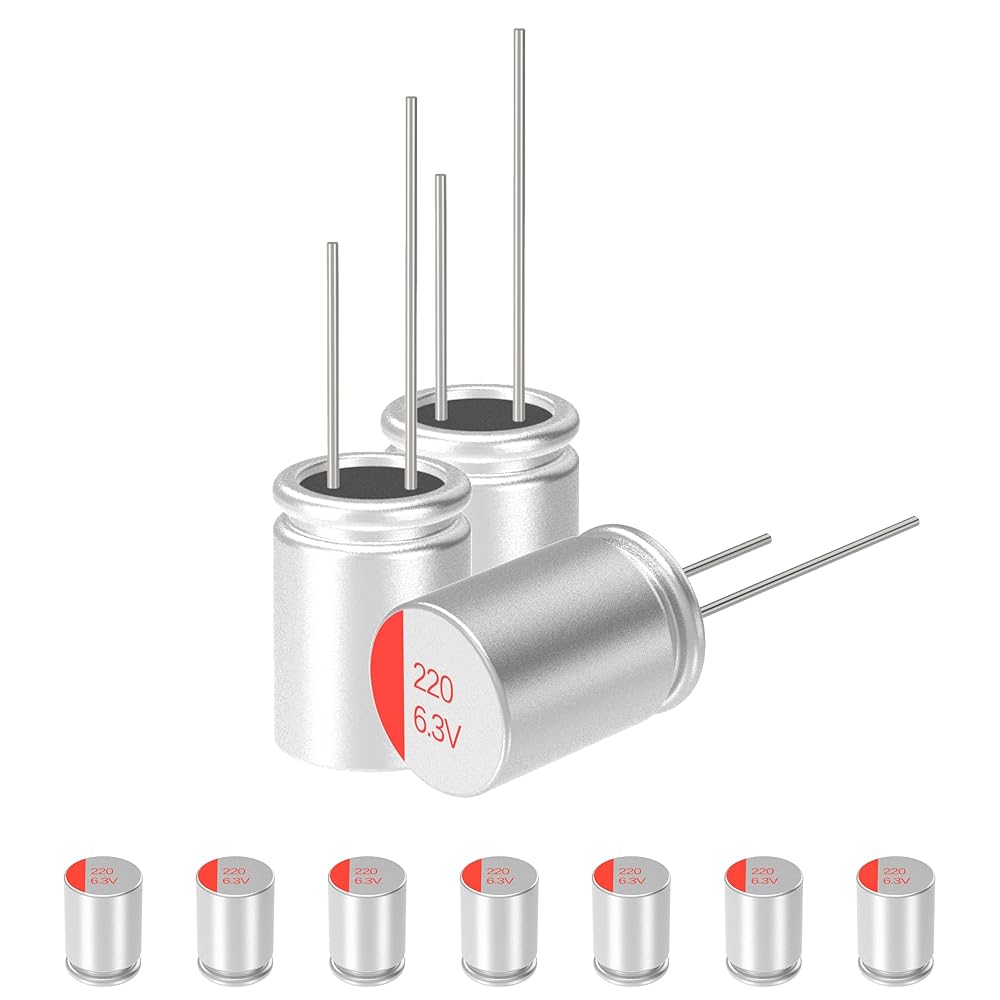
Lead spacing 5mm / Lead Diameter 0.6±0.1mm. Operating Temperature Range: -55℃ ~ +105℃ . Tolerance: ±20%
Excellent electrical performance with ultra low ESR. This key advantage stems from significantly lower internal resistance compared to traditional capacitors. Lower resistance means less energy wasted as heat during operation. When handling identical ripple currents, solid capacitors demonstrate markedly reduced power consumption and heat generation versus electrolytic alternatives. The result is substantially improved power circuit efficiency with noticeably cooler running temperatures
Excellent High-Frequency Filtering: In high-frequency environments (such as the power supply frequencies of modern CPUs and GPUs, which can reach hundreds of kHz to MHz), the ESR of electrolytic capacitors becomes very high, nearly losing their filtering function. In contrast, solid capacitors maintain an extremely low ESR across the entire frequency range, effectively filtering out high-frequency noise and providing the chip with a clean and stable current
Superior Lifespan & Reliability (5000+ hours @105°C): Solid capacitors utilize conductive polymer electrolyte, eliminating drying-out risks. Their extended lifespan depends on package degradation, ensuring exceptional stability. This prevents "bulging/venting" failures in motherboards/GPUs. In contrast, traditional electrolytic capacitors suffer from liquid electrolyte drying through seals, causing capacitance loss, ESR increase, and eventual failure - accelerated dramatically by heat
Wide Operating Temperature Range and Stability. Solid electrolytes maintain consistent performance across temperature extremes. From -55°C cold to 105°C heat, ESR and capacitance values remain stable. This reliability makes these capacitors ideal for automotive electronics and industrial equipment. Traditional electrolytic capacitors suffer from electrolyte thickening and freezing below 0°C, causing ESR spikes and performance deterioration
 Musiclily Pro عمود نحاسي كامل الحجم متري A500K أوعية جيتار مقاييس الجهد المستدق للصوت للجيتار الكهربائي/الباس (مجموعة من 4)
KWD 0
Musiclily Pro عمود نحاسي كامل الحجم متري A500K أوعية جيتار مقاييس الجهد المستدق للصوت للجيتار الكهربائي/الباس (مجموعة من 4)
KWD 0
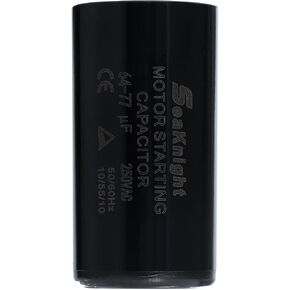 BlueNatHxRPR 64-77 MFD/uF مكثف تشغيل المحرك يتحمل الجهد 250 فولت تيار متردد
KWD 5
BlueNatHxRPR 64-77 MFD/uF مكثف تشغيل المحرك يتحمل الجهد 250 فولت تيار متردد
KWD 5
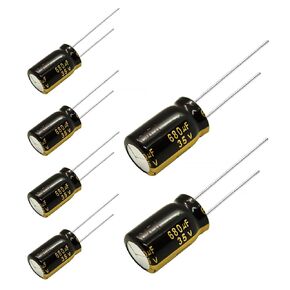 مكثفات باناسونيك FM 680 فائق التوهج 35 فولت من الألومنيوم كهربائيًا منخفضة ESR - الرصاص، 20% تسامح، 5000 ساعة عند 105 درجة مئوية، 12.50 مم × 20.00 مم (عبوة من 4)
KWD 3.500
مكثفات باناسونيك FM 680 فائق التوهج 35 فولت من الألومنيوم كهربائيًا منخفضة ESR - الرصاص، 20% تسامح، 5000 ساعة عند 105 درجة مئوية، 12.50 مم × 20.00 مم (عبوة من 4)
KWD 3.500
 -13%
محول TR50VA008، 50 فولت أمبير، 480/277/240/208 إلى 120 فولت أمبير، قاطع دائرة، قاعدة تثبيت على القدم ومحور مزدوج الخيوط
KWD 20.500
-13%
محول TR50VA008، 50 فولت أمبير، 480/277/240/208 إلى 120 فولت أمبير، قاطع دائرة، قاعدة تثبيت على القدم ومحور مزدوج الخيوط
KWD 20.500